Research article · OPEN ACCESS
Trends and Evolution in the Study of China's Natural Disaster Emergency Plans: A Bibliometric Analysis
- 1School of Emergency Management Science and Engineering, University of Chinese Academy of Sciences, Beijing, 100049, China
- 2National Institute of Natural Hazards, Ministry of Emergency Management of China, Beijing, 100085, China
- 3Key Laboratory of Compound and Chained Natural Hazards Dynamics, Ministry of Emergency Management of China, Beijing, 100085, China
- Received:
- Accepted:
- Published:
Abstract
The "Regulations on Natural Disaster Relief" were established by the Chinese government in 2009, followed by the formulation and subsequent revisions of the "National Emergency Relief Plan for Natural Disasters" in 2011, 2016, and 2024. To elucidate the progress and dynamics of disaster relief emergency planning in China over the past eight years, and to facilitate interpretation of the formulation and revision processes of emergency plans, an analysis of the literature on China’s natural disaster emergency management research from 2016 to 2024 is presented in this study. A total of 4,180 keywords from academic publications are examined for their frequency, emergence, co-occurrence, and evolutionary trends, revealing a notable shift in research priorities. From 2016 to 2018, focus was placed on foundational concepts, as evidenced by the prevalence of keywords such as "emergency management" (138 occurrences), "emergency plan" (65 occurrences), and "natural disasters" (51 occurrences). Between 2019 and 2021, attention shifted toward "collaborative governance" (10 occurrences) and "flood disasters" (23 occurrences), indicating increased emphasis on cross-sector coordination and responses to extreme weather events. By 2022 to 2024, the emergence of keywords like "urban communities" (18 occurrences), "community resilience" (11 occurrences), and "big data" (8 occurrences) suggested a growing integration of technology and a focus on localized resilience-building. The widespread adoption of emerging technologies, including big data, the Internet of Things, and social media, in disaster response is underscored by this analysis. Additionally, the pivotal role of communities and grassroots governments in enhancing resilience is highlighted. It is projected that future research will prioritize technological innovation and the reinforcement of social resilience, thereby supporting adaptive emergency management strategies amid climate change and rapid urbanization.
Keywords: Bibliometric Analysis;Trend Evolution;Natural Disasters;Emergency plan
1. Introduction
Natural disasters frequently occur, posing a significant threat to society and social development worldwide. This has triggered a global attention on establishing effective emergency management systems (Jones et al. 2024; Padgett et al. 2024). In China, which is faced with diverse natural risks due to its geography and climatic conditions, establishing comprehensive emergency plans and response mechanisms is crucial for social development (Lu and Han 2019). An emergency plan refers to the strategies and plans developed in advance to address potential sudden incidents. Its primary goal is to swiftly and effectively manage emergencies, minimizing threats to human lives, property, and the environment. Such plans encompass the entire process from monitoring and early warning, information dissemination, resource allocation, to post-disaster recovery. They serve as a vital tool for governments and organizations to enhance their emergency response capabilities (Perry and Lindell 2003; Wu and Liu 2003; Penadés et al. 2017).
The evolution of emergency management in China can be traced to the late 20th century. Initially, its application was confined to a limited scope; however, with rapid socio-economic growth and rising natural disaster risks, the coverage of emergency plans was progressively expanded across diverse domains (Zhang & Lv, 2024). The SARS outbreak in 2003 marked a pivotal turning point, catalyzing substantial reforms in China’s emergency management system. In response, a comprehensive initiative was launched to strengthen the emergency management framework. The “National Overall Emergency Plan for Public Emergencies” was issued by the Chinese government in 2005, establishing the legal and institutional foundation for emergency management. Subsequently, the “Emergency Response Law of the People’s Republic of China” was enacted in 2007, followed by the “Measures for the Administration of Emergency Response Plans” in 2013. These regulations clarified governmental responsibilities and obligations, bolstering the legal framework for emergency management. In recent years, emphasis has been placed on enhancing overall emergency management capabilities through the “One Plan, Three Systems” framework, encompassing emergency plans, mechanisms, and legal systems. Emergency plans are positioned as the cornerstone of this framework, with their planning, guidelines, and directives providing actionable guidance for implementation (Zhang & Li, 2022). To address emerging challenges driven by the intensified climate change and rapid urbanization, continuous revisions to emergency plans have been undertaken, improving their scientific rigor and practical applicability (Wu et al., 2021).
In 2009, the “Regulation on the Relief of Natural Disasters” was enacted by the Chinese government to standardize disaster relief efforts and to ensure basic living standards for the affected populations, with partial revisions introduced in 2019. These measures were designed to establish and refine the natural disaster relief system and its operational mechanisms, aiming to elevate the rule-of-law, standardization, and modernization of disaster relief. Enhanced capabilities for disaster prevention, mitigation, response, and emergency management were prioritized to minimize casualties and property losses, safeguard the basic needs of the affected individuals, and maintain social stability in disaster-stricken regions. Building on this foundation, the “National Emergency Plan for Natural Disasters” was separately formulated and revised in 2011, 2016, and 2024.
Under governmental leadership, emergency response plans in China have rapidly evolved. Concurrently, academic research on natural disaster relief and emergency response plans has deepened, providing a scientific theoretical basis for plan formulation at various levels. This research also aids in clarifying the primary content and orientation of these plans. Accordingly, over 4,000 papers related to natural disaster relief emergency plans, sourced from CNKI since 2016, were systematically reviewed and evaluated. Visual analysis methods were employed to assess research progress, dynamics, directions, and hotspots among domestic scholars in this field over the past eight years, facilitating further interpretation of emergency plan preparation and revision. The research findings will provide scientific support for policymakers and practitioners. This will help them further improve and innovate emergency response plans. Ultimately, these improvements will enhance the country's overall resilience and response capacity in dealing with natural disasters.
2. Materials and Methods
Data for this study were predominantly obtained from the China National Knowledge Infrastructure (CNKI), recognized as China’s largest academic literature database. Journal articles, conference papers, and other scholarly works related to natural disaster emergency management, published between 2016 and August 2024, were selected. The analysis was informed by the core components and critical interpretations of the “National Emergency Relief Plan for Natural Disasters” (hereafter referred to as the Emergency Relief Plan). The choice of CNKI over international databases such as Web of Science, Scopus, or Google Scholar was driven by its extensive coverage of Chinese-language literature, which aligns with the study’s focus on China-specific policies and practices, though it limits the inclusion of global research perspectives.
To construct the search string, we first identified key terms based on a review of seminal studies and expert recommendations. We then refined these terms using keyword co-occurrence analysis. To ensure data quality, we applied strict inclusion criteria, excluding studies from predatory journals and those with insufficient citations or methodological flaws. The search strategy was structured as follows: documents were required to include at least one of the following keywords in their subject: “emergency plan,” “disaster assistance,” “disaster information,” “post-disaster assistance,” “emergency response,” or “emergency material support” with “natural disaster” appearing in the abstract. The publication period was restricted to post-2016. After manual screening to exclude less relevant entries, a total of 4,180 documents were retained, comprising journal articles, theses, conference proceedings, and newspaper articles.
Bibliometrics, a methodology that examines scientific knowledge using mathematical and statistical approaches, leverages computer-aided visualization to generate knowledge maps. These maps illustrate foundational concepts, structural relationships, and evolutionary trends within a field (Du et al., 2017; Hou et al., 2021). In this study, bibliometric visualization of the CNKI literature was conducted using CiteSpace 6.3.1 (https://citespace.podia.com/) and VOSviewer 1.6.20 (https://www.vosviewer.com/). For CiteSpace, we set the time slicing to 1 year (2016–2024), selected keywords as the node type, and applied a threshold of the top 25 most frequent items per slice, with pathfinder pruning to reduce network complexity and highlight key trends. This annual slicing helped control bias in keyword burst detection by evenly distributing the analysis across the study period, though normalization was not applied, as we relied on raw frequency and burst strength to reflect research intensity accurately. For VOSviewer, we set a minimum co-occurrence frequency of 10 for keywords and used a clustering resolution of 1.0 to balance granularity and interpretability. High-frequency keyword analysis, keyword co-occurrence, and keyword clustering were employed to investigate research themes and the broader disciplinary landscape.
3. Results and Discussion
3.1. Keyword Frequency Analysis
By extracting the titles, keywords, and abstracts from the selected literature, we conducted a frequency analysis of the terms that appeared. As shown in Table 1, a higher frequency indicates that a term is mentioned more often in the literature, underscoring its central role within the research field. Additionally, Betweenness Centrality reflects the mediating role of a term within the network, indicating the extent to which it connects other terms.
In terms of frequency of occurrence, high-frequency terms such as “natural disaster” and “emergency response” indicate that these concepts hold significant importance in the research. The term “emergency management”, being the most frequently occurring, demonstrates that it is the central theme in both research and practice. An effective emergency management system is essential for enhancing disaster response capabilities and optimizing resource allocation (Zhang et al. 2021).
The term “emergency response” emphasizes the necessity for rapid reaction and coordinated organization following a natural disaster, marking it as an indispensable component of emergency management (Guo et al. 2024). Similarly, “emergency rescue” and “emergency materials” highlight that the management and allocation of emergency resources are critical elements in responding to natural disasters. The timely deployment of materials and the efficient organization of rescue teams are pivotal to successful disaster relief (Gan et al. 2024; Wang et al. 2024).
Furthermore, “emergency plan” refers to the framework developed to address specific natural disasters, which includes predefined response procedures, resource inventories, and designated responsibilities. Effective emergency plans can significantly reduce the losses caused by disasters (Chen and Yan 2021; Wang et al. 2021). The frequent occurrence of “natural disaster” and related terminology underscores their importance in disaster management; a standardized definition and detailed categorization of disasters facilitate the formulation of targeted policies and emergency plans (Han et al. 2018; Zhang et al. 2018; Li et al. 2022; Liu et al. 2022). “Monitoring and early warning” indicates that the establishment and refinement of early warning systems directly influence the effectiveness of emergency management. Timely monitoring and information dissemination can considerably enhance public awareness and improve disaster preparedness and response capabilities (Neussner 2021; Deng et al. 2023).
Terms with high intermediary centrality, such as “countermeasures”, “social media”, and “big data”, likely serve as bridges in the research, connecting multiple subtopics and research domains. Their presence suggests a certain degree of interdisciplinarity in the study of emergency management (Xu et al. 2021). In modern emergency management, big data and social media play crucial roles in information gathering, disaster tracking, and public communication. These technologies support decision-making by enhancing the real-time responsiveness and accuracy of efforts (Wang and Sun 2019; Zhou et al. 2022; Li and Jiang 2023)
Table 1. Top 25 Terms in frequency
| No. | Frequency | Intermediary centrality | Terms |
| 1 | 238 | 0.17 | Emergency Management |
| 2 | 174 | 0.2 | Natural Disasters |
| 3 | 158 | 0.29 | Emergency Response |
| 4 | 149 | 0.03 | Geological Disasters |
| 5 | 91 | 0.1 | Meteorological Disasters |
| 6 | 74 | 0.04 | Emergency Incidents |
| 7 | 72 | 0.01 | Disaster Prevention and Mitigation |
| 8 | 69 | 0.1 | Flood Disasters |
| 9 | 63 | 0.13 | Disasters |
| 10 | 56 | 0.24 | Earthquake Disasters |
| 11 | 50 | 0.03 | Emergency Rescue |
| 12 | 49 | 0.44 | Earthquake |
| 13 | 46 | 0.3 | Risk Assessment |
| 14 | 43 | 0.39 | Emergency Supplies |
| 15 | 38 | 0.03 | Emergency Plan |
| 16 | 36 | 0.38 | Typhoon Disasters |
| 17 | 35 | 0.04 | Disaster Relief |
| 18 | 32 | 0.05 | Emergency Logistics |
| 19 | 32 | 0.42 | Big Data |
| 20 | 28 | 0.55 | Social Media |
| 21 | 25 | 0.7 | Countermeasures |
| 22 | 23 | 0.09 | Monitoring and Early Warning |
| 23 | 22 | 0.23 | Unmanned Aerial Vehicles |
| 24 | 21 | 0.04 | Disaster Management |
| 25 | 20 | 0.18 | Earthquake Emergency Response |
Notes: Word frequency represents the occurrence of specific terms in the analyzed texts, indicating their prominence. Centrality values measure the importance of these terms within the semantic network, reflecting their relevance in the overall discourse.
We also observed that terms such as “natural disaster”, “geological disaster”, “meteorological disaster”, “flood disaster”, “earthquake disaster”, and “typhoon disaster” reflect varying degrees of attention given to different types of disasters in the research, highlighting the diversity of research subjects. Based on the annual reports of the top ten natural disasters in China released by the Ministry of Emergency Management since 2019 (Supplements Table 1), the following characteristics can be identified:
Diversity of Disaster Types: According to the data, a wide variety of natural disasters have occurred in China in recent years, including typhoons, floods, earthquakes, landslides, and forest fires. Both 2019 and 2023 experienced super typhoons, such as Lekima and Doksuri, which caused severe damage, indicating that southeastern coastal cities remain highly vulnerable to extreme weather events (Xie and Shao 2024; Zheng et al. 2024; Yan et al. 2025). These typhoons not only bring strong winds and heavy rainfall but also trigger secondary disasters such as flooding and mudslides. Flood disasters have been recurrent across different years, particularly during the summer months (Cui et al. 2022; Wang et al. 2022b; Wu and Wan 2022). For instance, the torrential rains in mid-July 2020 and 2021 severely impacted Henan Province and the Yangtze River basin, exposing deficiencies in urban drainage systems and flood control infrastructure (Chen and Kong 2022). Additionally, frequent earthquakes in regions such as Qinghai and Sichuan suggest the presence of geological activity in these areas. There is an urgent need to strengthen earthquake early warning systems and emergency response capabilities in these high-risk regions (Huang et al. 2024; Huang et al. 2025).
Seasonal and Regional Characteristics: Natural disasters tend to be concentrated in specific seasons, particularly during summer and autumn. Heavy rainfall, floods, and typhoons predominantly occur between June and August, whereas winter months are characterized by low temperatures and snowstorms. The Yangtze River Basin, South China, and Northeast China are among the most severely affected regions. The occurrence of natural disasters also varies by geographical location. In central and western China, landslides and forest fires are more frequent due to mountainous terrain and dry conditions. In contrast, southeastern coastal areas are highly vulnerable to typhoons and flooding. These regional differences pose significant challenges for disaster management, necessitating the development of targeted emergency response plans to address the unique risks in each area.
Impact of Climate Change: The increasing frequency and severity of natural disasters indicate a growing impact of climate change. Prolonged summer and autumn droughts, as well as extreme winter cold spells, pose significant challenges to agriculture and ecosystems. The rising occurrence of extreme weather events has forced policymakers and stakeholders to reassess emergency management strategies and post-disaster recovery efforts. These findings underscore the necessity of enhancing emergency response and preparedness. The frequent occurrence of natural disasters has compelled governments and relevant institutions to improve their emergency management capabilities. The emergency responses to Super Typhoon Lekima in 2019 and the catastrophic Henan rainfall event in 2021 both faced enormous challenges, revealing shortcomings in disaster forecasting, information dissemination, and resource allocation. Strengthening these areas is essential for mitigating future disaster impacts.
Key Concepts in Disaster Management and Technological Applications: Terms such as “risk assessment”, “disaster management”, “disaster relief”, and “disaster prevention and mitigation” represent different phases and approaches within disaster management, spanning from pre-disaster prevention and preparedness to post-disaster relief and recovery. These concepts highlight the comprehensive nature of disaster response strategies. Meanwhile, emerging technological terms such as “big data”, “social media”, and “drones” indicate the increasing role of advanced technologies in disaster response (Lu et al. 2019; Guo et al. 2020). The integration of these technologies has become a crucial research focus in emergency disaster relief, as they enhance the efficiency of disaster response through real-time information collection, situational awareness, and rapid decision-making.
3.2. Burstiness Analysis
Burstiness analysis is a method in bibliometric analysis used to identify instances where the frequency of a specific keyword increases sharply within a given time period. This phenomenon typically indicates that the keyword has garnered significant attention from researchers, possibly in relation to specific events or emerging research hotspots. Figure 1 presents the co-occurrence map of keywords derived from the analysis. The higher the burst strength, the more attention the keyword received during the particular time frame.
In the context of the burst analysis, the term "flood disaster" (burst=7.17) stands out prominently, especially around 2022. This surge aligns with significant policy shifts in China’s disaster management framework, driven by the devastating "7·20" Henan rainstorm event in 2021, resulted in severe urban flooding and substantial casualties (Li and Jiang 2023). After the disaster, a series of policy revisions were introduced to strengthen flood resilience. The State Council issued directives targeting comprehensive flood prevention planning, urban drainage improvements, and faster emergency response protocols. Concurrently, the Ministry of Emergency Management (MEM) revised the “National Flood Control and Drought Relief Emergency Plan” in 2022, prioritizing real-time monitoring, IoT-based data integration, and cross-regional resource coordination.
Other keywords such as "social assistance”, "database”, and "risk management" experienced short-term bursts between 2016 and 2017. The research intensity of these keywords rapidly increased, only to stabilize or decline shortly thereafter, indicating that these areas were likely closely related to specific events. In contrast to short-term bursts, some keywords, such as "information extraction”, experienced sustained bursts from 2016 to 2018, indicating that research on the application of these technologies or methods in disaster relief maintained a longer-term intensity. This is likely because information extraction technology gradually became more widely applied in disaster response, continuously improving in practical uses. Other keywords, such as "resilience" and "collaborative governance”, began to burst in 2022, signaling that these concepts have increasingly garnered attention in recent years. This surge may be linked to the growing focus on addressing complex disasters and enhancing societal resilience, which have become cutting-edge topics in current research (Fan and Liu 2019; Wan et al. 2022; Zhan and Wang 2024).
The burstiness of these keywords not only reflects the current research hotspots but also provides clues for future research trends. Analyzing the time series of keyword bursts reveals the evolution of research hotspots over different time periods. For instance, between 2016 and 2017, researchers were more focused on managing disasters through methods such as "social assistance" and "databases." However, after 2020, with the advancements in technology, the research focus has progressively shifted toward leveraging emerging technologies like deep learning and big data for disaster response. This shift suggests that future disaster relief research may increasingly rely on technology-driven solutions. The widespread application of these technologies could potentially transform traditional disaster management models and provide new perspectives for the development of emergency response plans (Ma and Mei 2021; Sun et al. 2022; Yang et al. 2024).
| Terms | Burst intensity | Begin | End |
| Social Assistance | 3.7 | 2016 | 2017 |
| Database | 3.24 | 2016 | 2017 |
| Risk Management | 3.24 | 2016 | 2017 |
| Relief | 3.24 | 2016 | 2017 |
| Information Extraction | 3.08 | 2016 | 2018 |
| Disaster Relief | 2.54 | 2016 | 2017 |
| Impact Factors | 4.66 | 2017 | 2018 |
| Disaster Assistance | 4.48 | 2017 | 2018 |
| Rescue | 2.79 | 2017 | 2018 |
| Meteorological Services | 3.62 | 2018 | 2020 |
| Emergency Relief | 3.3 | 2018 | 2019 |
| Emergency Plans | 3.31 | 2018 | 2020 |
| Post-Disaster Reconstruction | 2.82 | 2018 | 2019 |
| Typhoon | 3.82 | 2019 | 2021 |
| Disaster Management | 3.06 | 2020 | 2021 |
| Deep Learning | 2.74 | 2020 | 2022 |
| Local Governments | 2.61 | 2021 | 2022 |
| Disaster Risk | 2.6 | 2021 | 2022 |
| Flood Disaster | 7.17 | 2022 | 2024 |
| Resilience | 4.49 | 2022 | 2024 |
| Collaborative Governance | 3.49 | 2022 | 2024 |
| Urban Communities | 3.54 | 2022 | 2024 |
| Climate Change | 2.47 | 2022 | 2024 |
| Emergency Management | 3.03 | 2022 | 2024 |
| Resilience Assessment | 2.69 | 2022 | 2024 |
Fig. 1 Top 25 Terms with the Strongest Citation Bursts. The red bars represent the time period in the high-frequency concentration of the corresponding term
3.3. Keyword Co-occurrence Cluster Analysis
The keyword co-occurrence map illustrates the relationships between different keywords. Each node represents a keyword, with the size and color of the node indicating its importance or category within the dataset. The lines connecting the nodes represent the co-occurrence of these keywords within a specific context or dataset, and the thickness of the lines indicates the frequency or strength of the co-occurrence. Figure 2 presents the co-occurrence map of keywords derived from the analysis.
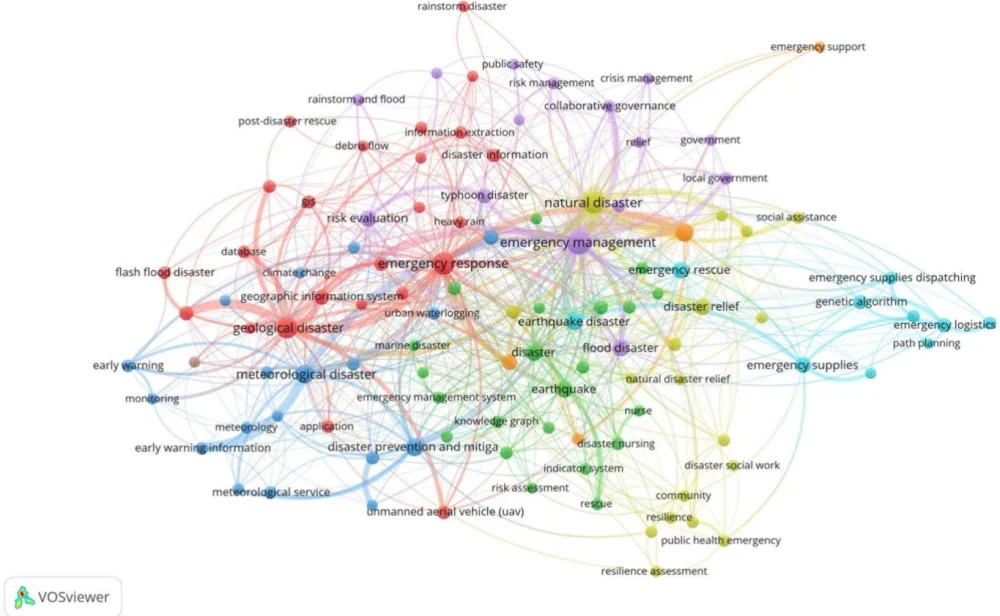
Fig. 2 Keyword co-occurrence clustering map. Each node represents a keyword, with size indicating frequency and color representing its cluster. The thickness of connecting lines indicates the strength of co-occurrence between keywords. Each color-coded cluster represents a distinct research theme or area.
In the Figure 2, the same color represents terms grouped into a category, which can be seen as corresponding to a primary research area or direction. However, this does not mean that they strictly belong to one category; rather, it reflects varying degrees of emphasis. For example, in the red cluster on the right side, the representative keywords include "emergency supplies”, "emergency rescue”, "emergency logistics”, and "genetic algorithms." This keyword cluster highlights an important direction in the research field of natural disaster relief emergency plans, specifically the application of intelligent algorithms and optimization techniques in emergency management and resource allocation.
Keywords such as "BP neural network", "NSGA-II algorithm", "ant colony algorithm", "genetic algorithm", "demand forecasting", "fuzzy demand", "uncertain demand", "case reasoning", "early warning mechanism", "risk perception", and "robust optimization" indicate that researchers are actively exploring and applying various intelligent algorithms to solve complex problems in emergency management. Closely associated keywords such as "earthquake rescue", "emergency rescue", "emergency supplies", "emergency supply distribution", "emergency supply scheduling", "emergency supply delivery", "emergency resource allocation", and "disaster relief supplies" reflect how, in the context of natural disaster emergency management, these algorithms are widely used in tasks such as optimizing resource allocation, demand forecasting, and path planning, helping to improve the efficiency and accuracy of emergency response (Liu et al. 2020; Wang et al. 2022a).
The keyword clusters such as "emergency capability”, "resilience assessment”, and "urban community" reflect research directions in the fields of natural disaster relief and emergency management, focusing on resilience building and evaluation, community governance, emergency capacity improvement, and multi-level risk management. Through terms like "resilience”, "resilient cities”, "resilient governance”, "resilience assessment”, and "resilience evaluation”, it is evident that researchers are highly concerned with improving the adaptability and recovery capabilities of cities, communities, and other entities in the face of disasters. Notably, “social organizations” in this cluster suggest the growing involvement of non-governmental organizations (NGOs), which collaborate with local governments and communities to enhance preparedness through training, resource mobilization, and grassroots initiatives. The concept of resilience has become increasingly important in recent disaster management research, especially in responding to sudden natural disasters like climate change, earthquakes, and floods (Zhou et al. 2021). This group of keywords also emphasizes multi-level methods for resilience assessment and governance. Researchers construct evaluation systems and methods (such as fuzzy comprehensive evaluation, Delphi method, Bayesian networks, etc.) to systematically assess and improve the resilience of different levels (Huang et al. 2021).
Keywords such as "local government”, "government assistance”, "community”, and "community resilience" highlight the important role of government and social forces in emergency management and resilience building. Local governments and communities, as organizations directly facing the public, play a critical role in enhancing emergency response capabilities and building resilient communities. These keywords also emphasize the importance of communities as the foundational units of emergency management and disaster response. Building community resilience is a key part of improving overall social resilience, involving the enhancement of community response capabilities in the face of emergencies through multi-source information integration and the improvement of emergency response abilities (Qin et al. 2017; Wilson et al. 2018).
Keywords such as "city”, "urban flooding”, "rainstorm”, "rainstorm waterlogging”, "rainstorm flooding”, "rainstorm flood disasters”, "extreme weather”, "secondary disasters”, "meteorological disaster warning information”, "flood”, "flooding”, "flood disasters”, "disaster chains”, "disaster situation”, and "emergency disasters" clearly indicates that researchers are highly focused on meteorological disasters, especially the impact of natural disasters like rainstorms and flooding on cities.
Keywords such as "information diffusion”, "information services”, "public safety”, and "meteorological disaster warning information" indicate that research in this field also involves the dissemination and management of disaster information. During a disaster, the timely and accurate transmission of information is crucial for enhancing public safety awareness and guiding emergency response actions. Therefore, building effective information diffusion mechanisms and providing timely, accurate information services is a key focus of research in this area.
Keywords such as "disaster chain" and "secondary disasters" highlight the research on the cascading effects of natural disasters and the subsequent secondary disasters they trigger. These studies focus on how to identify, predict, and manage the series of secondary disasters that may follow an initial event, ensuring that comprehensive response measures can be implemented when facing a disaster chain. For example, a typhoon may cause heavy rainfall, which in turn leads to flooding, and flooding may further result in traffic jams and the occurrence of secondary disasters. Such research contributes to a more comprehensive understanding and management of the complexities of disasters.
The keywords such as "information dissemination”, "crisis communication”, "sentiment analysis”, and "social media" indicate that this area of research focuses on how to effectively communicate and release information during crises or disaster events. This includes using social media platforms (such as government Weibo) to disseminate disaster warning information, real-time updates on the situation, and rescue progress, while also examining the public's reactions and emotional tendencies towards these communications.
Keywords such as "big data”, "data mining”, "machine learning”, "deep learning”, and "text classification" indicate that researchers are exploring how to use big data and artificial intelligence technologies to improve the efficiency and accuracy of disaster management. Through these technologies, researchers can extract useful information from large amounts of disaster-related data and conduct pattern recognition and predictive analysis (Li et al. 2022; Bai et al. 2022). The terms "information extraction" and "information retrieval" highlight the use of text mining and natural language processing techniques to automatically extract disaster-related information from various data sources, such as social media, news reports, and government documents, in order to facilitate rapid collection and dissemination of disaster information.
Keywords such as "Internet of Things (IoT)”, "smart cities”, and "object-oriented" indicate that the concepts of IoT and smart cities are being applied in disaster management. IoT technology enables real-time collection of disaster-related data through sensor networks, while smart city systems integrate this data to provide comprehensive disaster emergency support for urban managers
3.4. Keyword Evolution Analysis
The period from 2016 to 2024 is divided into three time-intervals, and high-frequency keywords for each period were statistically analyzed to uncover trends in the evolution of research hotspots. The results are shown in Table 2.
In the periods of 2016-2018, 2019-2021, and 2022-2024, "emergency management" consistently occupied a central position as a keyword, with its frequency fluctuating slightly (138 → 155 → 139). This suggests that emergency management, as a foundational theory and practical framework, has remained a focal point of research across different periods. The frequency of "natural disasters" did not decrease in any of the three time periods (51 → 59 → 57), indicating that research has continuously focused on natural disasters and their responses.
Furthermore, there was a noticeable increase in the frequency of "flood disasters" (11 → 23 → 33), which suggests that the impact of climate change on different types of natural disasters has become more significant over time. The frequency of "emergency response" and "emergency plans" remained relatively stable during 2019-2021 (58 and 53), demonstrating the interdependent relationship between emergency response and plan formulation within emergency management research. However, from 2022-2024, research related to "emergency response" saw an increase (60). The frequency of "emergencies" remained stable (49 → 51 → 29), while "risk management" remained present throughout each period, highlighting the ongoing emphasis on risk assessment and management mechanisms, particularly in the context of frequent disasters.
Additionally, emerging research topics have begun to appear. Keywords from 2022-2024, such as "urban communities”, "community resilience”, and "resilient cities”, suggest that future research will increasingly focus on the capacity of cities to cope with natural disasters, as well as the autonomy and resilience-building of communities. The frequency of terms like "social organizations" and "social assistance" indicates that the role of social forces in emergency management is becoming more prominent, and in the future, a collaborative governance model involving governments, communities, and social organizations may emerge. The appearance of technical terms such as "meteorological services" and "big data" highlights the growing application of technology in natural disaster emergency management, which is expected to become a key focus of future research, particularly in data-driven decision-making.
2016-2018: During this period, research primarily focused on foundational concepts such as emergencies, meteorological disasters, and geological disasters, as well as specific disaster types. This suggests that the research in this phase concentrated on emergency management and the formulation of response plans for various types of disasters (Figure 3).
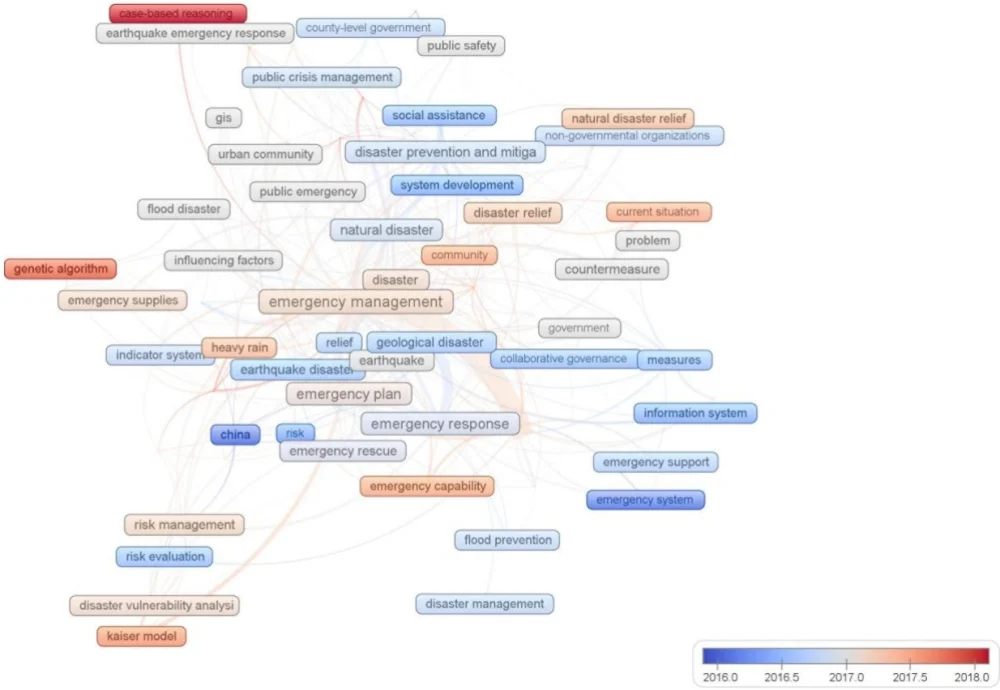
Fig. 3 2016-2018 keyword co-occurrence time map. Each node represents a keyword, the size indicates the frequency, and the color indicates the time it first appeared. The thickness of connecting lines indicates the strength of co-occurrence between keywords.
2019-2021: During this period, more disaster types such as flood disasters and earthquake disasters emerged as key focus areas. The appearance of the term "collaborative governance" indicates that the academic community began to emphasize the coordination among different departments and organizations in emergency response efforts. Research during this phase became more focused on collaborative cooperation in disaster response and the formulation of specific response plans for various types of disasters (Figure 4).
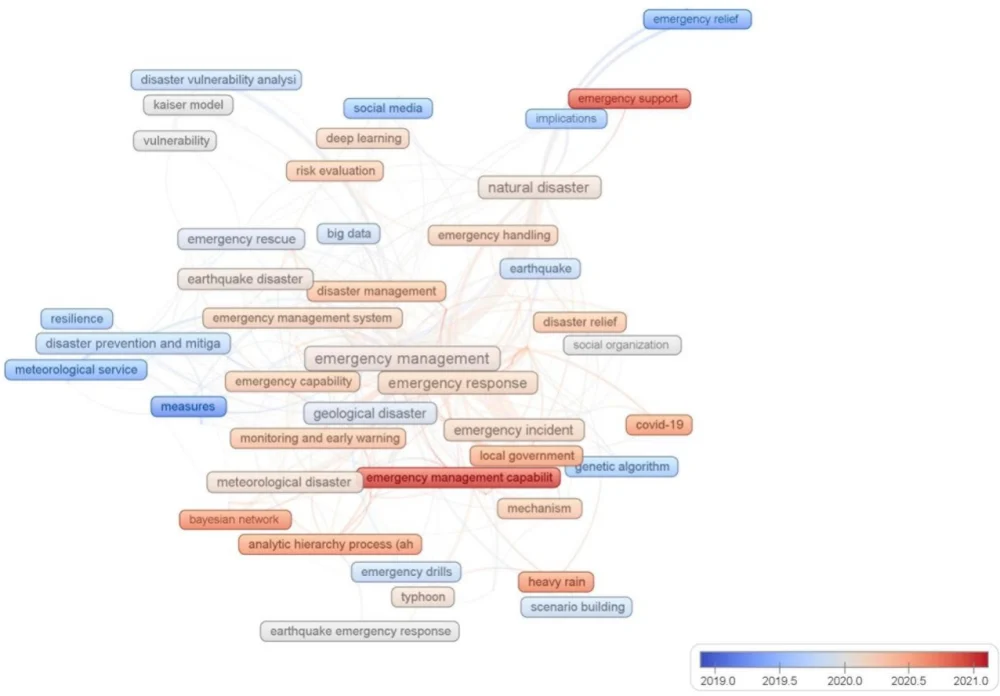
Fig. 4 2018-2021 keyword co-occurrence time map. Each node represents a keyword, the size indicates the frequency, and the color indicates the time it first appeared. The thickness of connecting lines indicates the strength of co-occurrence between keywords.
2022-2024: Keywords such as urban communities, emergency management capacity, resilience, and big data emerged, reflecting the growing focus on the role of urban communities in disasters, enhancing emergency management capabilities, using big data technologies for disaster response, and the necessity of building resilient cities. This indicates that research is gradually moving towards a more refined and technology-driven direction, exploring ways to strengthen society's emergency response capacity and resilience (Figure 5).
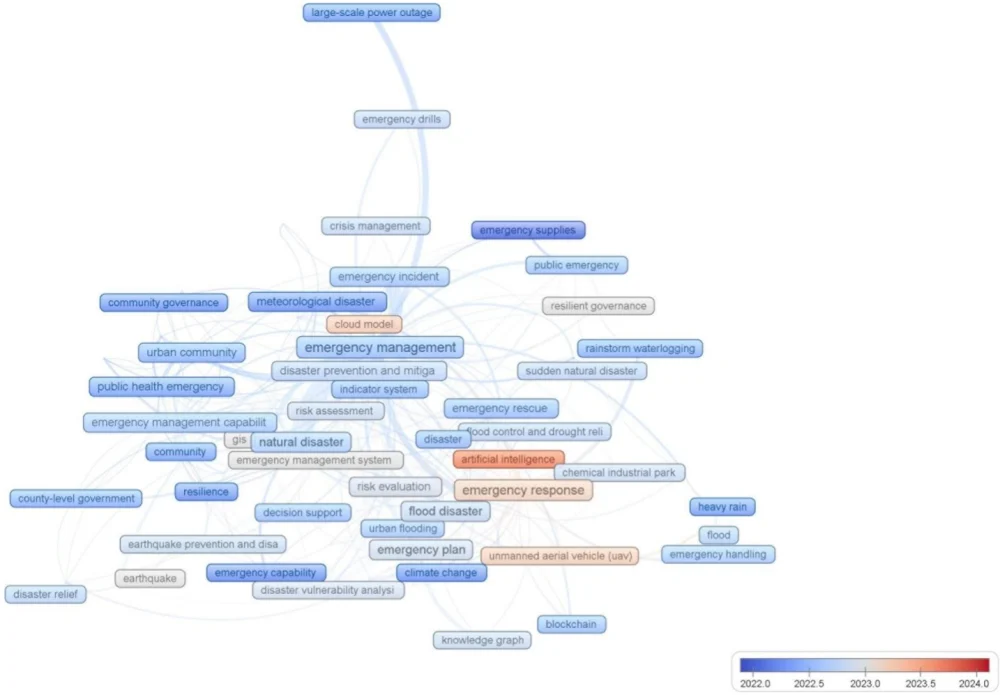
Fig. 5 2022-2024 keyword co-occurrence time map. Each node represents a keyword, the size indicates the frequency, and the color indicates the time it first appeared. The thickness of connecting lines indicates the strength of co-occurrence between keywords.
The shift from "emergency response" to "collaborative governance" reflects multiple driving factors. Politically, the establishment of the Ministry of Emergency Management in 2018 centralized disaster management in China, fostering cross-sectoral coordination and elevating collaborative governance as a priority. Major disasters, such as the 2021 Henan “7·20” rainstorm, exposed limitations in traditional response-focused approaches, prompting a shift toward integrated governance to address complex, multi-stakeholder challenges. Globally, the Sendai Framework for Disaster Risk Reduction (2015–2030) has influenced this trend by emphasizing resilience and cooperation, encouraging China to align with international best practices. These factors collectively explain the observed evolution in research focus.
From the analysis of keywords across these three time periods, it is evident that research in the field of natural disaster relief and emergency planning is gradually shifting from foundational theories to a greater emphasis on practical applications and technological innovations. Research hotspots have transitioned from emergency management and plan development to emerging areas such as collaborative governance, resilience building, and the application of big data. Future research may focus more on how to leverage technological means to enhance the intelligence of emergency management and how to strengthen the overall resilience of society in the context of urbanization and climate change.
Table 2. High-frequency keywords for each time period
| No. | 2016-2018 | 2019-2021 | 2022-2024 |
| 1 | Emergency Management/138 | Emergency Management/155 | Emergency Management/139 |
| 2 | Emergency Plan/65 | Natural Disasters/59 | Emergency Response/60 |
| 3 | Natural Disasters/51 | Emergency Response/58 | Natural Disasters/57 |
| 4 | Emergent Events/49 | Emergency Plan/53 | Emergency Plan/44 |
| 5 | Emergency Response/47 | Emergent Events/51 | Flood Disasters/33 |
| 6 | Disaster Prevention and Mitigation/34 | Geological Disasters/29 | Emergent Events/29 |
| 7 | Meteorological Disasters/31 | Disaster Prevention and Mitigation/26 | Disaster Prevention and Mitigation/24 |
| 8 | Geological Disasters/25 | Meteorological Disasters/24 | Geological Disasters/20 |
| 9 | Disaster Relief/23 | Flood Disasters/23 | Urban Communities/18 |
| 10 | Disasters/22 | Earthquake Disasters/19 | Emergency Management Capability/18 |
| 11 | Emergency/21 | Disasters/17 | Public Health Emergencies/17 |
| 12 | Countermeasures/20 | Public Emergencies/17 | Collaborative Governance/16 |
| 13 | Earthquake/19 | Countermeasures/15 | Meteorological Disasters/16 |
| 14 | Earthquake Disasters/19 | Public Health Emergencies/15 | Emergency Rescue/15 |
| 15 | Emergency Rescue/19 | Emergency Rescue/14 | Risk Assessment/15 |
| 16 | Risk Management/19 | Emergency Capability/13 | Emergency Management System/12 |
| 17 | Emergency Handling/16 | Disaster Management/13 | Community Resilience/11 |
| 18 | Crisis Management/11 | Earthquake/12 | Earthquake Disasters/10 |
| 19 | Local Government/11 | Emergency Supplies/12 | Urban Waterlogging/10 |
| 20 | Earthquake Emergency/11 | Meteorological Services/12 | Emergency Capability/10 |
| 21 | Influencing Factors/11 | Risk Assessment/12 | Disaster Vulnerability Analysis/10 |
| 22 | Flood Disasters/11 | Typhoon/11 | Resilience/9 |
| 23 | Disaster Vulnerability Analysis/11 | Emergency Handling/11 | Resilient Cities/9 |
| 24 | Public Emergencies/11 | Emergency Management System/11 | Resilience Governance/9 |
| 25 | Emergency Capability/10 | Collaborative Governance/10 | Kaiser Model/8 |
| 26 | Risk Assessment/10 | Earthquake Emergency/10 | Big Data/8 |
| 27 | Emergency Supplies/9 | Analytic Hierarchy Process (AHP)/10 | Analytic Hierarchy Process (AHP)/8 |
| 28 | Meteorological Services/9 | Emergency/10 | Climate Change/8 |
| 29 | Social Assistance/9 | Measures/10 | Disasters/8 |
| 30 | Social Organizations/9 | Disaster Relief/10 | Public Emergencies/8 |
| The format in the table is keywords/frequency | |||
3.5. Resilience Framework Analysis
Resilience has emerged as a key concept in disaster management research, yet its theoretical grounding in this study remains underdeveloped. To strengthen the analysis, we integrated the established resilience frameworks, specifically the Sendai Framework for Disaster Risk Reduction (2015–2030) and Cutter’s Disaster Resilience of Place (DROP) model, to contextualize and interpret our findings. The Sendai Framework outlines four priorities to enhance disaster resilience: (1) understanding disaster risk, (2) strengthening disaster risk governance, (3) investing in disaster risk reduction for resilience, and (4) enhancing disaster preparedness for effective response and recovery. The keyword analysis reveals a clear shift toward governance and resilience-building, aligning with the second and third priorities of the framework. High-frequency terms such as 'collaborative governance,' 'community resilience,' and 'emergency management capacity' suggest a growing emphasis on local-level empowerment and resource integration — key tenets of the Sendai Framework. Moreover, the rise of technological keywords like 'big data,' 'Internet of Things (IoT),' and 'social media' supports the first priority of enhancing risk understanding. These technologies contribute to real-time monitoring and early warning systems, reinforcing the framework’s call for data-driven risk awareness and management.
Cutter’s DROP model emphasizes the multi-dimensional nature of resilience, encompassing social, economic, institutional, and infrastructural factors (Cutter et al 2008). Our analysis reflects this multi-dimensionality, particularly through the clustering of keywords like 'risk assessment,' 'emergency logistics,' and 'urban communities,' which indicate both physical preparedness and social capacity building. The concept of 'community resilience' — emerging strongly between 2022-2024— resonates with DROP’s social dimension, highlighting the importance of grassroots involvement and local governance. Additionally, terms like 'collaborative governance' and 'social assistance' suggest a shift toward institutional resilience, where local governments and social organizations play pivotal roles in disaster response and recovery.
Building on these frameworks, future research should explore how emerging technologies can further enhance resilience across multiple dimensions. Key directions include: 1) Integrating big data and IoT systems to improve predictive analytics and early warning mechanisms, advancing the Sendai Framework’s first priority 2) Strengthening collaborative governance models to promote cross-sectoral coordination, in line with both Sendai and DROP’s institutional focus 3) Enhancing community resilience by fostering local capacity-building initiatives, ensuring that resilience extends beyond infrastructure to encompass social and economic systems.
3.6 Research Limitations
While this study provides valuable insights into the trends and evolution of China’s natural disaster emergency management research, several limitations should be acknowledged:
The data source is limited to CNKI, China’s largest academic literature database. It offers comprehensive coverage of Chinese studies but may introduce a national bias by excluding international perspectives. This focus was deliberate, given the study’s aim to analyze research trends within the context of China’s unique emergency management system and policy framework. However, it may overlook relevant global research published in English or other languages, potentially limiting the generalizability of the findings. International databases such as Web of Science (WoS), Scopus, or Google Scholar could provide a broader perspective, and their exclusion reflects a trade-off prioritizing depth within the Chinese context over global breadth. Future research could benefit from incorporating these diverse data sources, combining bibliometric analysis with content analysis or expert interviews to gain a more comprehensive understanding of the field.
The bibliometric analysis method itself has constraints. While it effectively identifies trends, co-occurrences, and keyword bursts, it cannot fully capture the qualitative depth of the studies analyzed. Future research could benefit from incorporating more diverse data sources, such as Web of Science or Scopus, and combining bibliometric analysis with content analysis or expert interviews to gain a more comprehensive understanding of the field.
4. Future Outlook
Building on the identified trends, this section outlines the anticipated changes in natural disaster emergency management in China, focusing on the impacts of climate change and accelerated urbanization within the scope of the study’s subthemes.
Climate change is expected to intensify the frequency and severity of extreme weather events, such as floods, typhoons, and droughts, posing new challenges to emergency management. The increasing prevalence of keywords like “flood disasters” (33 occurrences in 2022–2024) signals a growing research focus on climate-driven hazards. Future studies are likely going to prioritize advanced technologies—big data, IoT, and drones—to enhance predictive modeling and real-time response capabilities, ensuring emergency plans adapt to evolving climate risks. For instance, integrating machine learning with meteorological data could improve early warning systems (Yang et al., 2024).
Accelerated urbanization, reflected in keywords like “urban communities” (18 occurrences) and “resilient cities” (9 occurrences), will amplify disaster risks, particularly urban flooding and infrastructure strain. As cities expand, research will likely emphasize collaborative governance models, involving local governments, communities, and NGOs, to strengthen urban resilience. The 2021 Henan “7·20” rainstorm underscored the need for such coordination to address urban vulnerabilities. Future efforts may focus on smart city technologies and community-level preparedness to mitigate these risks, aligning with the Sendai Framework’s resilience goals.
These anticipated shifts reinforce the study’s subthemes—technology integration, governance, and resilience— highlighting their critical role in addressing climate change and urbanization. Research will likely deepen in these areas, balancing innovation with practical, localized solutions to safeguard China’s disaster management framework.
5. Conclusion
This paper systematically analyzes research literature on emergency management of natural disasters in China from 2016 to 2024 and summarizes the following key conclusions:
1) Rapid Development of the Research Field: In recent years, research on emergency plans for natural disaster relief in China has experienced significant growth. This progress is attributed to the continuous improvement of the government’s emergency management system and the widespread application of technological solutions in disaster response. China's emergency management system has rapidly advanced, establishing a framework centered on the "One Plan, Three Systems" approach through the formulation and revision of various emergency plans and legal regulations.
2) Evolution of Research Hotspots: By analyzing keyword frequency, burst detection, co-occurrence, and evolutionary trends in relevant literature from CNKI between 2016 and 2024, this study reveals the shifting research focus in the field of natural disaster emergency response planning. Early research predominantly focused on fundamental concepts and specific disaster types, such as sudden incidents, meteorological disasters, and geological disasters. However, the focus has gradually shifted toward emerging areas such as collaborative governance, resilience building, and big data applications. This trend indicates a transition from theoretical research to practical applications and technological innovations.
3) Extensive Application of Technological Methods: The application of emerging technologies in disaster response has become a key research direction. Technologies such as big data, social media, drones, the Internet of Things (IoT), and smart cities play a crucial role in disaster information extraction, early warning systems, emergency response, and resource allocation. The widespread adoption of these technologies not only enhances the efficiency and accuracy of disaster response but also provides scientific support for the formulation and revision of emergency plans.
4) The Role of Communities and Local Governments: The importance of communities and local governments in disaster response has become increasingly prominent. Researchers are highly focused on enhancing the adaptability and recovery capacity of cities and communities in the face of disasters, as well as strengthening emergency response capabilities through collaborative efforts between governments and social forces. Community resilience building, as a key component of overall societal resilience, has emerged as one of the major research hotspots in recent years. NGOs further amplify these efforts by facilitating community-level preparedness, leveraging their flexibility to deliver training, resources, and post-disaster support, complementing governmental strategies.
5) Compared to global studies, China’s trends reflect a unique blend of centralized governance and rapid urbanization, differing from technology-driven approaches in the USA or cross-border coordination in the EU. While strategies like collaborative governance and resilience-building are broadly applicable, their implementation in China is shaped by its political system and disaster profile, suggesting relevance to other influential nations (e.g., USA, EU) but with contextspecific adaptations. Reciprocal influence is evident: China adopts global frameworks like the Sendai Framework, while contributing to international knowledge through initiatives like the Belt and Road, fostering collaborative research and technology transfer.
6) Drawing from these findings, efforts could focus on several areas to enhance future disaster management. Strengthening the development of big data and IoT infrastructure nationwide could improve real-time monitoring and response capabilities. Enhancing collaboration between governments, NGOs, and communities might further support effective governance frameworks. Additionally, prioritizing resources for community-based resilience initiatives, such as training and local resource centers, could bolster preparedness at the grassroots level.
Author Contribution
Y.H. and C.X. are the main authors of the manuscript, and X.H. and H.G. assist in revising the manuscript. W.W. and Y.Y. provide support and suggestions for research theories.
Acknowledgements
This research is supported by the Fundamental Research Program of the National Institute of Natural Hazards, Ministry of Emergency Management (Project No.: ZDJ2024-16, 2023-JBKY-57).
Conflict of Interests
The authors declare no conflicts of interest.
Data Availability
The data supporting the findings of this study are available upon request from the corresponding author.
References
Bai, H., Yu, H., Yu, G., Huang, X., 2022, A novel emergency situation awareness machine learning approach to assess flood disaster risk based on Chinese Weibo: Neural Computing and Applications, v. 34, no. 11, p. 8431-8446, https://doi.org/10.1007/s00521-020-05487-1 Back to citation
Chen, C., Yan, Y., 2021, Emergency plan drilling system based on disaster digital twin: China Safety Science Journal, v. 31, no. 7, p. 90-96, https://doi.org/10.16265/j.cnki.issn1003-3033.2021.07.013 Back to citation
Chen, Z., Kong, F., 2022, Study on fragmentation of emergency management during “7·20” extreme rainstorm flood disaster in Zhengzhou of Henan Province and relevant comprehensive treatment: Water Resources and Hydropower Engineering, v. 53, no. 8, p. 1-14, https://doi.org/10.13928/j.cnki.wrahe.2022.08.001 Back to citation
Cui, K., Wang, J., Lin, J., Ning, Z., Shi, K., Wang, Y., Geng, C., 2022, Analysis on the Development Trend of Emergency Rescue Technology in Flood Disaster: Journal of Catastrophology, v. 37, no. 2, p. 150-155, https://doi.org/10.3969/j.issn.1000-811X.2022.02.024 Back to citation
Cutter, S. L., Barnes, L., Berry, M., Burton, C., Evans, E., Tate, E., Webb, J., 2008, A place-based model for understanding community resilience to natural disasters: Global Environmental Change, v. 18, no. 4, p. 598-606, https://doi.org/10.1016/j.gloenvcha.2008.07.013 Back to citation
Deng, L., Yuan, H., Zhang, M., Chen, J., 2023, Research progress on landslide deformation monitoring and early warning technology: Journal of Tsinghua University (Science and Technology), v. 63, no. 6, p. 849-864, https://doi.org/10.16511/j.cnki.qhdxxb.2023.22.002 Back to citation
Du, H. S., Ke, X., Chu, S. K. W., Chan, L. T., 2017, A bibliometric analysis of emergency management using information systems (2000-2016): Online Information Review, v. 41, no. 4, p. 454-470, https://doi.org/10.1108/OIR-05-2017-0142 Back to citation
Fan, B., Liu, R., 2019, Collaborative Management Theory on Emergency Information Exchanging Systems: Journal of Information Resources Management, v. 9, no. 4, p. 10-17, https://doi.org/10.13365/j.jirm.2019.04.010 Back to citation
Gan, J., Ling, Y., Li, J., 2024, Evaluating Urban Emergency Rescue Accessibility from a Supply-Demand Coordination Perspective: A Case Study of the July 20, 2021 Torrential Rainstorm in Zhengzhou: Urban Transport of China, v. 22, no. 5, p. 50-56, https://doi.org/10.13813/j.cn11-5141/u.2024.0505 Back to citation
Guo, C., Xu, Q., Dong, X., Ju, Y., Ning, H., 2020, Application of UAV photogrammetry technology in the emergency rescue of catastrophic geohazard: Bulletin of Surveying and Mapping, v, no. 10, p. 6-11, https://doi.org/10.13474/j.cnki.11-2246.2020.0309 Back to citation
Guo, H., Qu, G., Yang, Y., 2024, Research progress and trends of natural disaster chain in China(1987—2022)——Visual analysis based on Cite Space: Safety and Environmental Engineering, v. 31, no. 6, p. 118-133, https://doi.org/10.13578/j.cnki.issn.1671-1556.20230834 Back to citation
Han, S., Wang, J., Li, N., 2018, Features of urban flood disaster in China and guide to avoid danger during emergency situation: City and Disaster Reduction, v, no. 4, p. 21-25, https://doi.org/10.3969/j.issn.1671-0495.2018.04.006 Back to citation
Hou, L., Mao, L., Liu, H., Zhang, L., 2021, Decades on emergency decision-making: a bibliometric analysis and literature review: Complex & Intelligent Systems, v. 7, no. 6, p. 2819-2832, https://doi.org/10.1007/s40747-021-00451-5 Back to citation
Huang, G., Li, D., Zhu, X., Zhu, J., 2021, Influencing factors and their influencing mechanisms on urban resilience in China: Sustainable Cities and Society, v. 74, no., p. 103210, https://doi.org/10.1016/j.scs.2021.103210 Back to citation
Huang, Y., Xu, C., He, X., Cheng, J., Huang, Y., Wu, L., Xu, X., 2024, Distribution characteristics and cumulative effects of landslides triggered by multiple moderate-magnitude earthquakes: a case study of the comprehensive seismic impact area in Yibin, Sichuan, China: Landslides, v. 21, p. 2927-2943, https://doi.org/10.1007/s10346-024-02351-4 Back to citation
Huang, Y., Xu, C., He, X., Cheng, J., Xu, X., Tian, Y., 2025, Landslides induced by the 2023 Jishishan Ms6.2 earthquake (NW China): spatial distribution characteristics and implication for the seismogenic fault: npj Natural Hazards, v. 2, no. 1, p. 14, https://doi.org/10.1038/s44304-025-00064-9 Back to citation
Jones, T. J., Nyce, H., Le Moigne, Y., Williams-Jones, G., Nyce, D., 2024, Rethinking natural hazards research and engagement to include co-creation with Indigenous communities: npj Natural Hazards, v. 1, no. 1, p. 34, https://doi.org/10.1038/s44304-024-00034-7 Back to citation
Li, X., Liu, H., Wang, W., Zheng, Y., Lv, H., Lv, Z., 2022, Big data analysis of the internet of things in the digital twins of smart city based on deep learning: Future Generation Computer Systems, v 128, p. 167-177, https://doi.org/10.1016/j.future.2021.10.006
Li, Y., Jiang, J., 2023, A brief analysis of Zhengzhou "7.20" heavy rainstorm and improvement of the urban meteorological disaster emergency response and disposal mechanism: China Flood & Drought Management, v. 33, no. 4, p. 61-65, https://doi.org/10.16867/j.issn.1673-9264.2022227 1 2
Li, Z., Fu, D., Wang, J., Min, K., Zhang, J., 2022, Urban resilience assessment model for waterlogging disasters and its application: Journal of Tsinghua University (Science and Technology), v. 62, no. 2, p. 266-276, https://doi.org/10.16511/j.cnki.qhdxxb.2021.22.037
Liu, C., Shen, W., Huang, S., 2022, Some Viewpoints on Strategies in Risk Reduction of Geological Disasters in China: Journal of Catastrophology, v. 37, no. 3, p. 1-4, https://doi.org/10.3969/j.issn.1000-811X.2022.03.001 Back to citation
Liu, Y., Li, Y., Niu, Y., Jin, D., 2020, Joint Optimization of Path Planning and Resource Allocation in Mobile Edge Computing: IEEE Transactions on Mobile Computing, v. 19, no. 9, p. 2129-2144, https://doi.org/10.1109/TMC.2019.2922316 Back to citation
Lu, M., Liao, X., Yue, H., Huang, S., Xu, C., Lu, H., Bai, Y., 2019, Determining the Distribution of Unmanned Aerial Vehicles Airports for the Emergency Monitoring of Floods in China: Journal of Geo-information Science, v. 21, no. 6, p. 854-864, https://doi.org/10.12082/dqxxkx.2019.180177
Lu, X., Han, Z., 2019, Emergency management in China: towards a comprehensive model? : Journal of Risk Research, v. 22, no. 11, p. 1425-1442, https://doi.org/10.1080/13669877.2018.1476901
Ma, Z., Mei, G., 2021, Deep learning for geological hazards analysis: Data, models, applications, and opportunities: Earth-Science Reviews, v. 223, p. 103858, https://doi.org/10.1016/j.earscirev.2021.103858 Back to citation
Neussner, O., 2021, Early warning alerts for extreme natural hazard events: A review of worldwide practices: International Journal of Disaster Risk Reduction, v. 60, p. 102295, https://doi.org/10.1016/j.ijdrr.2021.102295 Back to citation
Padgett, J. E., Rincon, R., Panakkal, P., 2024, Future cities demand smart and equitable infrastructure resilience modeling perspectives: npj Natural Hazards, v. 1, no. 1, p. 28, https://doi.org/10.1038/s44304-024-00028-5 Back to citation
Penadés, M. C., Núñez, A. G., Canós, J. H., 2017, From planning to resilience: The role (and value) of the emergency plan: Technological Forecasting and Social Change, v. 121, p. 17-30, https://doi.org/10.1016/j.techfore.2016.12.004 Back to citation
Perry, R. W., Lindell, M. K., 2003, Preparedness for Emergency Response: Guidelines for the Emergency Planning Process: Disasters, v. 27, no. 4, p. 336-350, https://doi.org/10.1111/j.0361-3666.2003.00237.x Back to citation
Qin, W., Lin, A., Fang, J., Wang, L., Li, M., 2017, Spatial and temporal evolution of community resilience to natural hazards in the coastal areas of China: Natural Hazards, v. 89, no. 1, p. 331-349, https://doi.org/10.1007/s11069-017-2967-3 Back to citation
Sun, J., Liu, Y., Cui, J., He, H., 2022, Deep learning-based methods for natural hazard named entity recognition: Scientific reports, v. 12, no. 1, p. 1-15, https://doi.org/10.1038/s41598-022-08667-2 Back to citation
Wan, J., Luo, M., Wang, S., Xu, X., 2022, Research on the Dispatch of Emergency Materials for Typhoon Disasters from the Perspective of Resilient Cities: Journal of Wuhan University of Technology(Information & Management Engineering), v. 44, no. 4, p. 541-546, https://doi.org/10.3963/j.issn.2095-3852.2022.04.005 1 2 3
Wang, F., Xie, Z., Liu, H., Pei, Z., Liu, D., 2022a, Multiobjective Emergency Resource Allocation under the Natural Disaster Chain with Path Planning: International Journal of Environmental Research and Public Health, v. 19, no. 13, p. 7876, https://doi.org/10.3390/ijerph19137876
Wang, H., Wang, J., Chi, B., Zhang, D., Yang, C., Liu, Q., 2021, Study on Special Emergency Preplan Compiling for Major Earthquake Disaster in Beijing, Tianjin and Hebei Region: City and Disaster Reduction, v, no. 6, p. 7-14, https://doi.org/10.3969/j.issn.1671-0495.2021.06.003 Back to citation
Wang, M., Wang, W., Dai, C., Ma, C., Luo, Y., Xu, M., 2024, Risk analysis and evaluation of emergency rescue in landslide disaster: Natural Hazards, v. 120, no., p. 14809–14835 https://doi.org/10.1007/s11069-024-06811-x Back to citation
Wang, Y., Sun, B., 2019, Research on Emergency Material Allocation Mode for Sudden DisasterUnder Big Data Environment: Science and Technology Management Research, v. 39, no. 7, p. 226-233, https://doi.org/10.3969/j.issn.1000-7695.2019.07.032 Back to citation
Wang, Z., Yao, C., Dong, J., Yang, H., 2022b, Precipitation characteristic and urban flooding influence of “7·20” extreme rainstorm in Zhengzhou: Journal of Hohai University(Natural Sciences), v. 50, no. 3, p. 17-22, https://doi.org/10.3876/j.issn.1000-1980.2022.03.003
Wilson, G. A., Hu, Z., Rahman, S., 2018, Community resilience in rural China: The case of Hu Village, Sichuan Province: Journal of Rural Studies, v. 60, no., p. 130-140, https://doi.org/10.1016/j.jrurstud.2018.03.016 Back to citation
Wu, Q., Han, J., Lei, C., Ding, W., Li, B., Zhang, L., 2021, The challenges and countermeasures in emergency management after the establishment of the ministry of emergency management of china: A case study: International Journal of Disaster Risk Reduction, v. 55, no., p. 102075, https://doi.org/10.1016/j.ijdrr.2021.102075 Back to citation
Wu, Z., Liu, M., 2003, Gradation and Categorization System of Emergency Plan for Major Accidents and Their Main Contents: China Safety Science Journal, v, no. 1, p. 18-21, https://doi.org/10.16265/j.cnki.issn1003-3033.2003.01.004 Back to citation
Wu, Z., Wan, H., 2022, A brief analysis of "7·20" extreme rainstorm disaster of four cities in mountainous area of Zhengzhou in Henan Province in 2021: China Flood & Drought Management, v. 32, no. 3, p. 27-31, https://doi.org/10.16867/j.issn.1673-9264.2022051 Back to citation
Xie, X., Shao, Y., 2024, Application Potential of Social Media Data Analytics in Typhoon Disaster Management:Taking the Impact of Typhoon Doksuri on Fujian Province as an Example: Tropical Geography, v. 44, no. 6, p. 1090-1101, https://doi.org/10.13284/j.cnki.rddl.003880 Back to citation
Xu, X., Wang, Z., Xu, C., Zhao, Y., 2021, Natural Disaster Risk Analysis and Its Countermeasures of Major Urban Agglomerations in China: City and Disaster Reduction, v, no. 6, p. 1-6, https://doi.org/10.3969/j.issn.1671-0495.2021.06.002 Back to citation
Yan, Z., Wang, Z., Peng, M., 2025, Impacts of climate trends on the heavy precipitation event associated with Typhoon Doksuri in Northern China: Atmospheric Research, v. 314, no., p. 107816, https://doi.org/10.1016/j.atmosres.2024.107816 Back to citation
Yang, Z., Qi, W., Xu, C., Shao, X., 2024, Exploring deep learning for landslide mapping: A comprehensive review: China Geology, v. 7, no. 2, p. 330-350, https://doi.org/10.31035/cg2024032 1 2
Zhan, C., Wang, T., 2024, Research on Anti-fragility Approach to Enhance the Resilience Capacity of Urban Communities:Taking the Flood Disaster in Beijing's H Street Community as an example: Journal of Institute of Disaster Prevention, v. 26, no. 2, p. 1-9, https://doi.org/10.3969/j.issn.1673-8047.2024.02.001 Back to citation
Zhang, P., Lv, D., 2024, Research on Contingency Plan in China: Evolution Picture and Evaluation Prospect——Quantitative Visual Analysis of 898 Included in CSSCI Documents Based on CNKI from 1998 to 2022: Journal of China Emergency Management Science, v, no. 3, p. 111-123. Back to citation
Zhang, Q., Lu, Q., Zhong, D., Ye, X., 2018, The Pattern of Policy Change on Disaster Management in China: A Bibliometric Analysis of Policy Documents, 1949–2016: International Journal of Disaster Risk Science, v. 9, no. 1, p. 55-73, https://doi.org/10.1007/s13753-018-0164-y Back to citation
Zhang, W., Gao, Z., Wang, C., 2021, Digital Transformation of Emergency Management System: Technical Framework and Policy Path: Strategic Study of Chinese Academy of Engineering, v. 23, no. 4, p. 107-116, https://doi.org/10.15302/j-sscae-2021.04.013 Back to citation
Zhang, Z., Li, Z., 2022, Emergency Management System Construction with Chinese Characteristics: Realistic Foundation, Existing Problems and Development Strategy: Journal of Management World, v. 38, no. 1, p. 138-144, https://doi.org/10.19744/j.cnki.11-1235/f.2022.0006 Back to citation
Zheng, Y., Huang, J., Li, S., Nie, J., Chen, H., Han, G., 2024, Socioeconomic impacts on damage risk from typhoons in mega-urban regions in China: A case study using Typhoons Mangkhut and Lekima: International Journal of Disaster Risk Reduction, v. 101, no., p. 104210, https://doi.org/10.1016/j.ijdrr.2023.104210 Back to citation
Zhou, Q., Zhu, M., Qiao, Y., Zhang, X., Chen, J., 2021, Achieving resilience through smart cities? Evidence from China: Habitat International, v. 111, no., p. 102348, https://doi.org/10.1016/j.habitatint.2021.102348 Back to citation
Zhou, Y., Tian, X., Zhong, M., 2022, Assessment of natural disaster emergency relief demand based on Microblog data: Journal of Tsinghua University (Science and Technology), v. 62, no. 10, p. 1626-1635, https://doi.org/10.16511/j.cnki.qhdxxb.2022.22.046 Back to citation