Review article · OPEN ACCESS
Review on Strength-Permeability Performance and Long-Term Durability of Recycled Aggregate Pervious Concrete
- 1North China University of Water Resources and Electric Power,Zhengzhou , 450000, China
- 2Puyang Longhu Investment and Development Co., Ltd., Puyang , 457000, China
- Received:
- Accepted:
- Published:
Abstract
With the massive generation of construction and demolition waste and the continuous advancement of sponge city construction, recycled aggregate pervious concrete (RAPC) has emerged as one of the key green building materials integrating solid waste resource utilization with urban ecological restoration, and has become a research hotspot in the field of civil engineering materials. This paper systematically reviews the compositional characteristics, preparation technology, mechanical and permeability properties, durability and influencing factors of RAPC. The results show that the adhered aged mortar and internal microcracks of recycled aggregates are the fundamental causes of performance degradation; parameters such as water-cement ratio and replacement rate significantly affect the performance, but there is a general inherent trade-off between strength and permeability. Sulfate attack, pore clogging and capillary water absorption pose severe threats to long-term durability, and its erosion resistance is weaker than that of ordinary concrete. Pore structure analysis provides a microscopic basis for understanding the above contradictions. Current research remains insufficient in terms of evaluation system, systematic durability research and test standardization. This paper aims to provide references for the research, development and engineering application of RAPC.
Keywords: Recycled aggregate pervious concrete;Mechanical property;Permeability;Chemical attack;Physical clogging
1. Introduction
With the continuous acceleration of China’s urbanization and the continuous expansion of urban scale, large-scale construction activities have generated enormous amounts of construction and demolition waste. According to statistics from the Ministry of Housing and Urban-Rural Development, by 2020, China’s newly added building volume reached approximately , and at least of construction and demolition waste was generated during construction, as shown in Fig 1.
However, the resource utilization rate of construction and demolition waste in China is less than 5%, far below the level of over 90% in developed countries. A large amount of construction waste is disposed of by open-air stacking or simple landfill, which not only occupies valuable land resources, but also causes serious secondary pollution to soil, groundwater and the atmospheric environment[1, 2].
Meanwhile, large-scale impermeable hardened pavements in modern cities have damaged the surface ecosystem, aggravating the urban “heat island effect” and waterlogging disasters. To address the above issues, the Chinese government has issued a series of policy documents, which explicitly require improving the resource utilization rate of construction waste and promoting the “infiltration, retention, purification, utilization and drainage” of urban rainwater runoff. Against this background, recycled aggregate pervious concrete (RAPC), which combines construction waste resource utilization with pervious pavement construction, came into being as a green building material that achieves the dual goals of solid waste consumption and sponge city construction.
Recycled aggregate pervious concrete is a type of porous concrete prepared by partially or fully replacing natural aggregates with recycled coarse aggregates obtained from crushing and screening waste concrete, mixed with cement, water and other materials. RAPC has an interconnected honeycomb pore structure inside, endowing it with good air and water permeability as well as certain mechanical strength. The extensive application of RA can not only effectively utilize waste concrete from construction debris and alleviate environmental pressure, but also replenish groundwater through natural rainwater infiltration, reduce surface runoff, and play a positive role in heat absorption, noise reduction and mitigating the heat island effect, delivering remarkable comprehensive social, economic and environmental benefits[3].
Nevertheless, the performance of RAPC is affected by multiple factors including recycled aggregate source, replacement rate, particle size gradation, water-cement ratio and molding process, with great variability and discreteness. Moreover, there is generally an inverse “trade-off” relationship between its strength and permeability, which has become a key bottleneck restricting its engineering application. Therefore, systematically sorting out the influence laws and internal mechanisms of various RAPC properties is of great significance for promoting the scientific design and reliable application of RA.
Based on relevant domestic and international research results, this paper systematically reviews the research progress of RAPC in mix proportion design, basic mechanical and permeability properties, durability, as well as performance prediction and optimization methods. It summarizes existing achievements and deficiencies, and puts forward prospects for directions such as standardization construction, long-term durability research and intelligent performance prediction, so as to provide a reference for in-depth R&D and sustainable engineering application of RAPC materials.
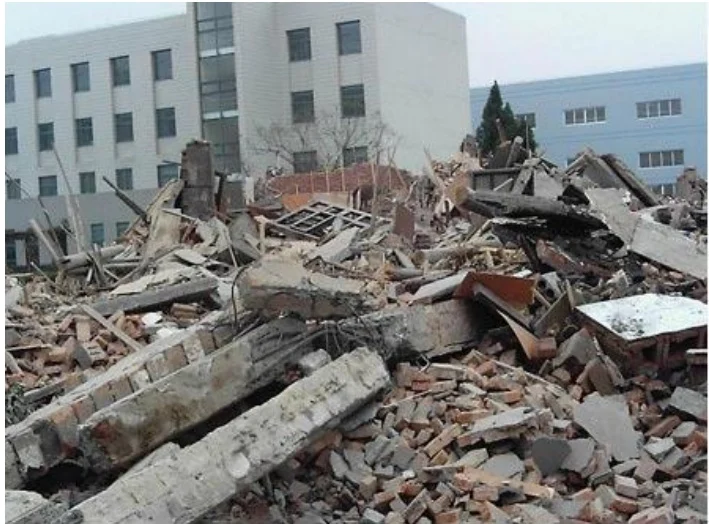
Fig. 1 Demolished construction waste in urban areas
2. Composition, Preparation and Basic Properties of RAPC
2.1. Characteristics of Recycled Aggregates (RA)
Recycled aggregates (RA) are processed from waste concrete blocks in construction debris through crushing, screening and other processes. According to particle size, they can be divided into recycled fine aggregates (particle size < 5mm) and recycled coarse aggregates (particle size > 5mm). Compared with natural aggregates, RA show significant differences in physical properties: their apparent density, bulk density and soundness are lower, while water absorption, crushing index and flaky-elongated particle content are significantly higher[4].
The root cause of the above differences is that the surface of RA is coated with a large amount of aged cement mortar, and numerous micro cracks are generated inside the aggregates and at the interfaces during the crushing process [5]. These characteristics not only give RA higher specific surface area and porosity, but also directly affect the workability of fresh RAPC and the mechanical properties of hardened RAPC.
To improve the performance of RA, scholars at home and abroad have proposed various strengthening and pretreatment methods, which can be roughly divided into physical and chemical categories. Physical methods mainly remove the aged mortar attached to the aggregate surface through mechanical friction (such as ball mill grinding) or eliminate flaky-elongated particles; chemical methods soak aggregates with chemical solutions (such as Kim powder solution containing high-efficiency anti-seepage waterproofing agents) to improve aggregate strength and reduce water absorption [6]. However, there is no unified and efficient standard process for aggregate modification at present, which remains one of the key factors restricting the performance stability of RAPC.
2.2. Preparation Technology of RAPC
Preparation technology is a critical link determining the performance uniformity and final quality of RAPC. In terms of molding methods, Gong et al. [7]systematically compared the effects of four methods on RAPC performance: manual tamping, vibration molding, pressure molding and vibration-pressure molding. The results showed that manual tamping achieved the best comprehensive performance. Wang et al. [8]further proposed that a molding method combining mechanical vibration and manual tamping can better balance strength and permeability. Although vibration molding can improve compactness and strength, the vibration time and pressure need to be precisely controlled. Excessive vibration easily causes cement paste to settle at the bottom and block the bottom pores, thereby significantly reducing permeability.
In terms of mixing technology, Wang et al. [9]showed that the strength of RAPC prepared by the two-step feeding method is superior to that of the traditional one-step feeding method. Li et al. [10]proposed a pre-wetted aggregate mixing method: first mix RA with part of the water for pre-wetting, then add cementitious materials, and finally add the remaining water for mixing. This method compensates for the influence of high water absorption of RA on the actual water-cement ratio, thereby improving the uniformity and strength of concrete.
2.3. Basic Mechanical Properties and Permeability of RAPC
Based on comprehensive existing literature data, the 28-day compressive strength of RAPC mostly ranges from 4 to 32 MPa, with the majority concentrated between 10 and 27.5 MPa; the permeability coefficient ranges from 0.69 to 35.5 mm/s, mostly between 1 and 12.5 mm/s; the porosity ranges from 8.2% to 32.8%, with most values between 12.5% and 25%. The above performance indicators can meet the basic requirements of application scenarios such as urban sidewalks, parking lots, slope protection and low-grade roads.
However, numerous studies [7, 11, 12, 13]have consistently confirmed a negative trade-off relationship between the strength and permeability of RAPC: when strength increases, permeability decreases, and vice versa. Studies by Chen et al. [14, 15]verified this rule, and Yuan et al. [16]also drew the same conclusion.
From a mechanistic perspective, the strength of RAPC mainly derives from the interlocking structure between aggregate particles and the bonding bridges formed by cement paste at aggregate contact points, while permeability depends on the proportion and tortuosity of connected pores. The requirements for pore characteristics of the two are essentially contradictory. This inherent antagonistic relationship constitutes the core challenge in RAPC material design, and is also a key bottleneck restricting its large-scale engineering application.
3. Influencing Factors of Key RAPC Properties
3.1. Microscopic Pore Structure and Its Characterization of RAPC
The properties of RAPC are fundamentally determined by its internal pore structure. Different from ordinary concrete, RAPC contains a large number of connected macroscopic pores, which serve not only as transmission channels for water and air, but also as the core micro structural feature determining its mechanical and permeability properties. Therefore, in-depth study of pore structure is the foundation for understanding the evolution mechanism of RAPC macroscopic properties.
For pore structure characterization, currently commonly used testing techniques include mercury intrusion porosimetry (MIP), nuclear magnetic resonance (NMR), gas adsorption and Image-based image analysis, each with its applicable pore size range. MIP can measure pore size distribution from 2 nm to 200 μm; NMR can characterize pore structure from 0.001 to 100 μm; gas adsorption is suitable for micro pore analysis from 0.5 to 35 nm; while Imagebased image analysis is mainly used for the measurement and statistics of large-aperture pores.
Duan et al .[17]used MIP to study the fractal characteristics of concrete pore structure under negative temperature conditions, and established a two-parameter strength model considering both pore number and pore size. Wei et al. [18]Found based on NMR technology that the increase of recycled aggregate replacement rate leads to the development of small, medium and large pores in concrete to varying degrees, and the change rate of pore volume can be used as an important indicator for evaluating concrete performance. Zhang et al. [19]proved that Image-based image analysis can be applied to in-depth study of the correlation between concrete pore structure and macroscopic properties. Guo et al. [20]further used this method to reveal that pore number and equivalent pore diameter are important factors affecting the compressive strength and permeability coefficient of RAPC.
Regarding the correlation between pore structure and macroscopic properties, studies have found that the relationships between porosity and compressive strength, and between porosity and permeability coefficient of RAPC all follow an exponential distribution [21]. Sata et al. [22]and Güneyisi et al. [23]drew similar conclusions: the permeability of RAPC is mainly controlled by effective porosity, and the increase of effective porosity means reduced load-bearing cross-section and increased stress concentration points, resulting in strength decline. This conclusion based on pore structure analysis confirms the essential root of the "trade-off" between RAPC strength and permeability from the microscopic level.
3.2. Effects of Material Composition on RAPC Performance
Mineral admixtures are an important means to regulate RAPC performance. Fly ash, silica fume and slag powder are the three most widely studied admixtures. Bai et al. [24]studied the effect of silica fume content on the properties of recycled aggregate concrete, and found that with the increase of silica fume content, compressive strength and elastic modulus first increase and then decrease, while peak strain shows the opposite trend. The micro-aggregate filling effect and pozzolanic activity of silica fume are its modification mechanisms.
Zhu et al.[25]found that the combined addition of fly ash and silica fume can significantly improve the sulfate attack resistance of concrete. The study by Gong et al.[26]revealed the synergistic effect of fly ash and silica fume in RAPC: the spherical particles of fly ash improve concrete fluidity, enabling fuller utilization of the pozzolanic effect of silica fume. The compressive strength of RAPC mixed with both admixtures is higher than that of specimens with single admixture or no admixture.
Fiber reinforcement is another effective approach to improve the mechanical properties of RAPC. Commonly used fiber types include polypropylene fiber, steel fiber, basalt fiber and polyvinyl alcohol (PVA) fiber. Polypropylene fiber is widely used due to its good alkali resistance and moderate price. He et al. [27]showed that the flexural strength of RAPC reaches the maximum when polypropylene fiber content is 0.9%. After fiber addition, the pores and cracks on the concrete surface are significantly reduced compared with the control group, which is attributed to the bridging effect of fibers inhibiting the propagation of microcracks.
For steel fiber, Gao et al.[28]found that the addition of steel fiber can improve the compressive strength of RAPC, and the reinforcement effect is better than that of natural aggregate concrete. The reason is that the thermal conductivity of steel fiber promotes cement hydration reaction, leading to better bonding between fiber and cement paste. As a new type of fiber with stable performance, basalt fiber was studied by Tian et al. [29], who found that at a content of 6 kg/m³, the cubic compressive strength, splitting tensile strength and flexural strength of recycled concrete increase by 12.8%, 48.8% and 10.5% respectively.
However, fiber content has a threshold effect. Huang et al. [30]pointed out that when PVA fiber content exceeds 0.1%, fiber aggregation forms stress concentration points, which instead leads to strength decline; the study by Guo et al. [31]Also confirmed the negative impact of fiber agglomeration on the basic properties of RAPC.
For polymer modification, Li et al. [32]found that when the mass ratio of polymer to cement is 5%, the compressive strength of RAPC can be increased by 79%. Aliabdo et al. [33]showed that both styrene-butadiene latex and silica fume have positive effects on the strength performance of RAPC. The mechanism of polymer improving RAPC performance is that it can form a flexible polymer film on the aggregate surface, enhance the bonding force between aggregate and paste, and improve the fluidity and coating uniformity of the paste.
3.3. Effects of Recycled Aggregate Physical Properties on RAPC
Numerous scholars have designed experiments to study the effect of recycled aggregate replacement rate on RAPC performance. Most studies [34, 35, 36]show that with the increase of replacement rate, the compressive strength of RAPC decreases and the permeability coefficient increases, but the relationship is not strictly linear.
Xiao et al. [37]found that the compressive strength of RAPC decreases at replacement rates of 30%, 70% and 100%, but is higher than that of natural aggregate pervious concrete at a 50% replacement rate. The study by Chen et al. [38]showed that the compressive strength of RAPC increases the most when the replacement rate is 30%. This nonlinear change originates from the competition between two mechanisms: on the one hand, the low strength of RA themselves and the aged mortar attached to the surface weaken the bearing capacity of the aggregate skeleton; on the other hand, the rough surface and high water absorption of RA are conducive to forming a closer inter facial bond with cement paste, which may produce positive effects within a certain replacement range.
Aggregate particle size and gradation also have significant effects. Chen et al. [39]found that RAPC prepared with 5~10 mm RA has higher compressive strength than specimens prepared with 10~20 mm aggregates, because smaller particle size aggregates have more contact points and a more stable skeleton structure.
Chen et al.[15, 18, 40]showed that when the ratio of 4.75~9.5 mm to 9.5~19 mm recycled aggregate gradation is 1:1 or 2:1, the comprehensive performance of RAPC is optimal. Sriravindrarajah et al. [41]also confirmed that reducing aggregate particle size can reduce porosity and permeability coefficient but increase compressive strength. Song et al. [42]further pointed out that smaller aggregate particle size leads to larger specific surface area, more contact points between aggregates, higher compactness and greater strength.
4. Performance Evolution and Degradation of RAPC in Service Environment
4.1. Chemical Attack Degradation: Performance Under Sulfate Action
Sulfate attack is one of the important factors affecting the long-term durability of RAPC. The erosion process can be divided into two stages: the first stage is physical damage caused by salt crystallization expansion when sodium sulfate solution enters the specimen without reaction during dry-wet cycles; the second stage is that sulfate ions react with cement hydration products (C-S-H, CH, C-A-H, etc.) to generate ettringite and gypsum, causing expansive cracking[43].
The sulfate attack resistance of RAPC is affected by multiple factors. First, regarding recycled aggregate replacement rate, Zhang et al. [44]found that recycled concrete with a 70% replacement rate has the smallest changes in strength, elastic modulus and mass loss rate under sulfate action, and the best erosion resistance. Zhu et al. [45]determined through orthogonal tests that the comprehensive erosion resistance is optimal at a water-cement ratio of 0.55, 50% recycled aggregate replacement rate and 30% fly ash content.
Second, the study by M. Nehdi [46]showed that the water-cement ratio has the greatest impact on the sulfate attack resistance of RAPC. Pan et al. [47]designed an orthogonal test with three factors: water-binder ratio, slag powder content and aggregate particle size. They found that aggregate particle size is inversely proportional to sulfate attack resistance, water-binder ratio is positively correlated with erosion resistance in the range of 0.25~0.29, and slag powder content is inversely proportional to erosion resistance.
Notably, due to the large amount of aged mortar attached to the surface of RA and the existence of internal microcracks, coupled with the inherent porosity of pervious concrete, the sulfate attack resistance of RAPC is generally weaker than that of ordinary concrete. However, there are still very few systematic studies on the sulfate attack resistance of RAPC under dry-wet cycles at home and abroad, and there is a lack of unified test methods and evaluation standards.
4.2. Physical Clogging Degradation: Permeability Function Under Sediment Action
Clogging is another key problem faced by RAPC during service. Sediments (silt, clay particles, pavement debris, etc.) carried by rainfall runoff gradually deposit on the surface and internal pores of RAPC during repeated dry-wet alternation, resulting in significant attenuation of permeability, or even complete loss of permeable function.
Regarding clogging mechanism and influencing factors, Zhou et al. [48]pointed out that the clogging degree is mainly controlled by the ratio of clogging particle size to pore size, and clogging is most likely to occur when the particle size ratio is 0.6~0.8. Zeng et al. [49]found that continuously graded clogging materials have a more significant impact on pervious concrete clogging than single-particle-size clogging materials.
Zhang [50]systematically studied the effects of porosity, clogging material type and cleaning method, and found that clogging materials containing viscous particles are very likely to cause complete loss of permeability; for clogging materials containing only non-viscous particles, particle gradation is the biggest factor affecting clogging degree.
Cui et al. [51]revealed three stages of clogging through a rapid clogging simulation test of pervious concrete pavement under rainstorm conditions: rapid clogging, partial recovery and progressive clogging. They found that larger porosity, better gradation of clogging silt and deeper rainstorm runoff lead to more severe clogging, while increased horizontal runoff velocity delays the clogging process but does not affect the final clogging degree.
Based on numerical simulation, Nan et al. [52]found that clogging materials with particle size of 0.3~0.6 mm mainly cause clogging within the 2 cm surface layer, while particles smaller than 0.3 mm can penetrate deep into the interior and accumulate in deep pores, forming deep clogging.
For clogging recovery, Zhang's [50]study showed that water gun cleaning has significantly better effect on clay and sand clogging than sweeping and no cleaning, but sweeping has limited effect and may even aggravate clogging. Xie et al. [53]pointed out that a single cleaning method has limited effect, and the combination of multiple cleaning methods can improve recovery efficiency.
Tan et al. [54]compared three recovery methods and found that high-pressure water gun flushing works best for stone powder and cement mortar particle clogging, while clear water flushing achieves the same effect for soil particle clogging. However, there is still a lack of long-term on-site tracking research on RAPC clogging, and the correlation between indoor simulation and actual service conditions needs further verification.
4.3. Moisture Transport Degradation: Performance Under Capillary Water Absorption
Capillary water absorption is the main mode of internal transport for water and aggressive ions (chloride ions, sulfate ions, etc.) in unsaturated RAPC, which is directly related to its long-term durability. As a porous hydrophilic material, RAPC has a large number of active hydroxyl groups derived from the hydration product Ca(OH)₂ on its surface. When in contact with water, water is rapidly drawn into the internal connected pores through capillary action and diffuses within them.
Regarding the time-varying law of capillary water absorption, numerous studies have shown its typical characteristic of "rapid initial stage, slowing middle stage and stable late stage". In the early stage of capillary water absorption (usually the first 1 hour), water absorption has a good linear relationship with t^1/2, and the water absorption rate gradually decreases until it stabilizes in the later stage [11]. Chen et al. [55]obtained a similar power function distribution law in RAPC.
For influencing factors, an increased water-cement ratio usually leads to higher capillary water absorption and water absorption coefficient, as a high water-cement ratio increases the number of capillary pores in hardened paste. The increase of recycled aggregate replacement rate will significantly enhance the capillary water absorption capacity of RAPC. Han et al. [56]found that the capillary water absorption of recycled concrete increases with the increase of replacement rate. Patrick Belin et al. [57]further pointed out that the 24-hour water absorption of RA can be regarded as the sum of capillary absorption from residual cement paste and the aggregate itself.
The effect of mineral admixtures is more complex: Ma et al.[58]found that the capillary water absorption coefficient is minimized at 30% fly ash content, which is attributed to the secondary hydration reaction of fly ash refining the pore structure; slag powder can reduce the capillary water absorption coefficient at 0~50% content, but increases it when exceeding 65%, because excessive slag powder leads to an increase in early shrinkage microcracks. The addition of steel fiber and water reducer can reduce the capillary water absorption of RAPC.
From a durability perspective, capillary water absorption provides the fastest channel for aggressive media to enter the interior of RAPC. Chen et al. [59]pointed out that during dry-wet cycles, capillary transport provides a faster channel for chloride ion intrusion than diffusion, and capillary water absorption is less sensitive to material curing time and hardening degree than diffusion. Therefore, in-depth study of the capillary water absorption behavior of RAPC and its influence mechanism on long-term durability has important theoretical and engineering significance. However, there are still few systematic studies on the capillary water absorption performance of RAPC at home and abroad, and there is a lack of unified test methods and evaluation indicators.
5. Conclusions
5.1. Main Conclusions
This paper systematically reviews the domestic and international research progress of recycled aggregate pervious concrete (RAPC) in terms of compositional characteristics, preparation technology, basic mechanical and permeability properties, durability evolution and influencing factors. The main conclusions are as follows:
(1) The physicochemical properties of RA are the fundamental factors affecting RAPC performance. Due to aged mortar attached to the surface and internal microcracks, RA exhibit characteristics such as high water absorption, large crushing index and low bulk density, which directly restrict the mechanical strength and long-term durability of RAPC. Although existing physical and chemical strengthening methods can improve aggregate quality to a certain extent, a standardized and efficient treatment process has not yet been formed.
(2) Mix proportion parameters and molding technology are key means to regulate RAPC performance. Factors such as water-cement ratio, design porosity, aggregate replacement rate and aggregate gradation have significant effects on strength and permeability. Among them, the water-cement ratio has an optimal range (about 0.30~0.35), and the replacement rate has a nonlinear effect on performance with an optimal range (about 30%~40%). Molding methods and mixing processes also affect performance uniformity and final quality.
(3) The inherent contradiction between strength and permeability is the core bottleneck of RAPC. A large number of studies have consistently shown a negative correlation between the two, rooted in the contradictory requirements of pore structure for mechanical bearing and water transport, which constitutes the fundamental challenge of RAPC material design.
(4) The durability problem of RAPC cannot be ignored. Under sulfate attack, RAPC is inferior to ordinary concrete in erosion resistance due to its porosity and the aged mortar attached to RA; sediment clogging during service can lead to significant attenuation or even complete loss of permeability; capillary water absorption provides a rapid intrusion channel for aggressive media. Systematic research on the above three aspects is still relatively weak.
(5) Pore structure analysis is an important approach to reveal the evolution mechanism of RAPC macroscopic properties. Characterization methods such as mercury intrusion porosimetry, nuclear magnetic resonance and Imagebased image analysis have been widely used in pore structure research, confirming the exponential distribution relationship between porosity and compressive strength, and between porosity and permeability coefficient, providing a microscopic basis for understanding the strength-permeability contradiction.
5.2. Deficiencies of Existing Research
(1) RA have complex sources and no unified evaluation system. The original concrete strength, service life and crushing process of RA vary greatly among different studies, and there is a lack of standardized classification and evaluation system, resulting in poor comparability of research results.
(2) Durability research lags behind basic mechanical property research. Existing achievements mostly focus on the strength and permeability of RAPC, and the understanding of long-term performance evolution laws and degradation mechanisms under complex service environments (freeze-thaw, carbonation, multi-factor coupling) is insufficient. In particular, systematic studies on sulfate attack resistance, clogging and capillary water absorption are still scarce.
(3) The strength-permeability contradiction has not been fundamentally broken through. Existing modification methods (admixtures, fibers, aggregate strengthening, etc.) can only improve RAPC performance within a limited range, and fail to fundamentally eliminate the antagonistic relationship between the two.
(4) There is a lack of unified test methods and evaluation standards. There are no recognized reference bases for RAPC durability tests (such as sulfate attack resistance, capillary water absorption). Problems such as long test cycles and susceptibility to external factors also restrict the in-depth development of relevant research.
References
[1] Wu Xiaoying, Yao Zheng. Compliance Analysis and Quality Control of Construction Waste as Subgrade Filler [J]. Engineering Technology Research, 2020, 5(13): 16-17. (in Chinese) 返回引用处
[2] Feng Wencheng. Status Analysis and Resource Treatment of Urban Construction Waste [J]. China Building Materials Science & Technology, 2015, 24(3): 26-27+44. (in Chinese) 返回引用处
[3] Song Zhibin, Zhang Meifang, Wang Baochun. Experimental Study on Pervious Concrete Pavement Bricks Alleviating Urban Heat Island Effect [J]. Concrete, 2008, (6): 94-95. (in Chinese) 返回引用处
[4] Yuan Hanqing, Jiang Youbao, Cui Yuli, et al. Permeability and Compressive Strength of Recycled Aggregate Pervious Concrete [J]. Materials Review, 2018, 32(S2): 466-470. (in Chinese) 返回引用处
[5] Peng Hao, Liu Wei, Zheng Yan, et al. Application of Response Surface Methodology in Multi-Objective Optimization of Mechanical and Durability Properties of Recycled Aggregate Concrete [J]. Concrete, 2026, (5): 103-108.(in Chinese) 返回引用处
[6] Liu Haibao. Effect of Nanomaterials on Microstructure and Properties of Interfacial Transition Zone in Recycled Concrete [D]. Qingdao University of Technology, 2023. (in Chinese) 返回引用处
[7] Gong Ping, Xie Xiandang, Li Juntao. Effect of Molding Technology on Properties of Recycled Aggregate Pervious Concrete [J]. Construction Technology, 2015, 44(12): 65-68. (in Chinese) 引用处:12
[8] Wang Lei. Study on Effect of Molding Method on Properties of Pervious Concrete [J]. Sichuan Architecture, 2019, 39(4): 259-261. (in Chinese) 返回引用处
[9] Wang Yu. Effect of Mixing Technology on Mechanical Properties of Pervious Concrete [J]. Qinghai Transportation Science and Technology, 2020, 32(3): 93-97. (in Chinese) 返回引用处
[10] Li Heng, Wang Jiabin, Guo Qingjun, et al. Study on Mechanical Properties of Recycled Concrete with Mineral Admixtures [J]. Bulletin of the Chinese Ceramic Society, 2020, 39(8): 2608-2614. (in Chinese) 返回引用处
[11] Güneyisi E, Gesoğlu M, Kareem Q, et al. Effect of different substitution of natural aggregate by recycled aggregate on performance characteristics of pervious concrete[J]. Materials and Structures, 2016, 49(1): 521-536. 引用处:12
[12] Sriravindrarajah R, Wang N D H, Ervin L J W. Mix design for pervious recycled aggregate concrete[J]. International Journal of Concrete Structures and Materials, 2012, 6(4): 239-246. 返回引用处
[13] Aliabdo A A, Abd Elmoaty M, Fawzy A M. Experimental investigation on permeability indices and strength of modified pervious concrete with recycled concrete aggregate[J]. Construction and Building Materials, 2018, 193: 105-127. 返回引用处
[14] Chen Shoukai, Li Binglin, Jiang Haifeng, et al. Analysis of Influence of Water-Binder Ratio on Properties of Recycled Aggregate Pervious Concrete [J]. Water Power, 2019, 45(10): 122-128. (in Chinese) 返回引用处
[15] Chen Shoukai, Liu Xinfei, Guo Lei, et al. Effect of Recycled Aggregate Proportion on Properties of Recycled Pervious Concrete [J]. Acta Materiae Compositae Sinica, 2018, 35(6): 1590-1598. (in Chinese) 引用处:12
[16] Yuan Hanqing, Jiang Youbao, Cui Yuli, et al. Permeability and Compressive Strength of Recycled Aggregate Pervious Concrete [J]. Materials Review, 2018, 32(S2): 466-470. (in Chinese) 返回引用处
[17] Duan Yun, Yang Zijiang, Wang Qicai, et al. Relationship Between Pore Structure and Strength and Permeability of Concrete Under Negative Temperature Environment [J]. Materials Review, 2022, 36(15): 72-77. (in Chinese) 返回引用处
[18] Wei Yimeng, Chai Junrui, Qin Yuan, et al. Change of Pore Distribution of Recycled Concrete Under Freeze-Thaw Cycles and Its Influence on Frost Resistance [J]. Bulletin of the Chinese Ceramic Society, 2018, 37(3): 825-830. (in Chinese) 引用处:12
[19] Zhang Xiong, Huang Tinghao, Zhang Yongjuan, et al. Image-Pro Plus Image Analysis Method for Concrete Pore Structure [J]. Journal of Building Materials, 2015, 18(1): 177-182. (in Chinese) 返回引用处
[20] Guo Lipeng, Zhu Qiang, Lin Shan. Study on Basic Properties and Pore Characteristics of Recycled Pervious Concrete [J]. Water Power, 2019, 45(12): 117-122. (in Chinese) 返回引用处
[21] Yang Qing, Liu Qiuchang, Chen Shoukai. Research Review of Recycled Aggregate Pervious Concrete [J]. Pearl River, 2017, 38(11): 81-86. (in Chinese) 返回引用处
[22] Sata V, Wongsa A, Chindaprasirt P. Properties of pervious geopolymer concrete using recycled aggregates[J]. Construction and Building Materials, 2013, 42: 33-39. 返回引用处
[23] Güneyisi E, Gesoğlu M, Kareem Q, et al. Effect of different substitution of natural aggregate by recycled aggregate on performance characteristics of pervious concrete[J]. Materials and Structures, 2016, 49(1): 521-536. 返回引用处
[24] Bai Weifeng, Li Wenhao, Yang Guang, et al. Effect of Silica Fume Content on Uniaxial Compression Properties of Recycled Aggregate Concrete [J]. Journal of North China University of Water Resources and Electric Power (Natural Science Edition), 2020, 41(6): 59-66. (in Chinese) 返回引用处
[25] Zhu Miaomiao, Liu Shiming, Ren Zhiguo, et al. Experimental Study on Mineral Admixtures Improving Sulfate Attack Resistance of High-Strength Concrete [J]. Journal of North China University of Water Resources and Electric Power (Natural Science Edition), 2020, 41(6): 67-72. (in Chinese) 返回引用处
[26] Gong P, Zhou Y. Influences of Mineral Admixture on Properties of Porous Pervious Concrete Made of Recycled Aggregates[J]. Advanced Materials Research, 2014, 919: 1934-1938. 返回引用处
[27] He Wenchang, Kong Xiangqing, Gao Huadong, et al. Study on Mechanical Properties and Microstructure of High Content Polypropylene Fiber Recycled Concrete [J]. Concrete, 2020, (1): 82-86. (in Chinese) 返回引用处
[28] Gao Danying, Lou Zhihui, Wang Zhanqiao. Experimental Study on Compressive Strength of Steel Fiber Reinforced Recycled Concrete [J]. Journal of Zhengzhou University (Engineering Science), 2007, (2): 5-10. (in Chinese) 返回引用处
[29] Tian Kai. Study on Effect of Basalt Fiber on Mechanical Properties of Recycled Concrete [J]. New Building Materials, 2019, 46(6): 22-24+103. (in Chinese) 返回引用处
[30] Huang Junfu, Wang Fusheng, Zhou Jingyong, et al. Study on Effect of PVA Fiber on Properties of Recycled Pervious Concrete [J]. Non-Metallic Mines, 2018, 41(6): 98-100. (in Chinese) 返回引用处
[31] Guo Lei, Liu Siyuan, Chen Shoukai, et al. Study on Mechanical Properties, Permeability and Wear Resistance of Fiber Modified Recycled Aggregate Pervious Concrete [J]. Transactions of the Chinese Society of Agricultural Engineering, 2019, 35(2): 153-160. (in Chinese) 返回引用处
[32] Li Qiushi, He Dongpo. Comparative Test of Natural and Recycled Aggregate Pervious Concrete [J]. Journal of Beijing University of Technology, 2015, 41(1): 89-94. (in Chinese) 返回引用处
[33] Aliabdo A A, Abd Elmoaty M, Fawzy A M. Experimental investigation on permeability indices and strength of modified pervious concrete with recycled concrete aggregate[J]. Construction and Building Materials, 2018, 193: 105-127. 返回引用处
[34] Wang Jing, Liu Qinyan, Cai Peng, et al. Study on Properties and Influencing Factors of Recycled Aggregate Pervious Concrete [J]. New Building Materials, 2018, 45(9): 42-46. (in Chinese) 返回引用处
[35] Wang Yasi, You Fan, Zheng Guangtao. Compressive Strength and Permeability of Recycled Aggregate Pervious Concrete [J]. Journal of Fuzhou University (Natural Science Edition), 2019, 47(4): 538-543. (in Chinese) 返回引用处
[36] Zhang Haobo, Du Xiaoqing, Kou Jialiang, et al. Experimental Study on Compressive and Permeable Properties of Recycled Aggregate Pervious Concrete [J]. Journal of Experimental Mechanics, 2017, 32(2): 247-256. (in Chinese) 返回引用处
[37] Xiao Jianzhuang, Li Jiabin, Sun Zhenping, et al. Study on Compressive Strength of Recycled Concrete [J]. Journal of Tongji University (Natural Science), 2004, (12): 1558-1561. (in Chinese) 返回引用处
[38] Chen Shoukai, Chang Chengyan, Guo Lei, et al. Effect of Recycled Aggregate Content on Properties of Pervious Concrete [J]. Journal of Basic Science and Engineering, 2018, 26(1): 98-108. (in Chinese) 返回引用处
[39] Chen Chun, Xu Dan. Study on Strength and Durability of Recycled Aggregate Pervious Concrete [J]. China Concrete and Cement Products, 2019, (9): 95-100. (in Chinese) 返回引用处
[40] Liu Xinfei, Chen Shoukai, Liu Qiuchang, et al. Gradation Optimization of Recycled Pervious Concrete Based on Grey Relational Analysis [J]. Yellow River, 2018, 40(9): 125-129. (in Chinese) 返回引用处
[41] Sriravindrarajah R, Wang N D H, Ervin L J W. Mix design for pervious recycled aggregate concrete[J]. International Journal of Concrete Structures and Materials, 2012, 6(4): 239-246. 返回引用处
[42] Song Chao, Liu Xiaoling, Su Xuanyi, et al. Experimental Study on Compressive Strength of Recycled Aggregate Porous Ecological Concrete [J]. Construction Technology, 2016, 45(3): 19-21. (in Chinese) 返回引用处
[43] Harish Gangaraju, Deepti Avirneni. Durability performance of recycled aggregate porous concrete for pavement base applications under acid and sulphate exposure [J]. Construction and Building Materials, 2026, 530: 146574. 返回引用处
[44] Zhu Xiaoyun, Sun Guoqing. Effect of Fly Ash on Sulfate Attack Resistance and Interfacial Transition Zone Microscopic Characteristics of Recycled Concrete [J]. China Concrete and Cement Products, 2019, (5): 92-96. (in Chinese) 返回引用处
[45] Nehdi M, Hayek M. Behavior of blended cement mortars exposed to sulfate solutions cycling in relative humidity[J]. Cement and Concrete Research, 2005, 35(4): 731-742. (in Chinese) 返回引用处
[46] Pan Wenjia, Gao Jianming, Song Wenfeng. Durability Evaluation of Accelerated Sulfate Attack on Porous Concrete Under Dry-Wet Alternation [J]. China Concrete and Cement Products, 2007, (6): 5-8. (in Chinese) 返回引用处
[47] Zhou H, Li H, Abdelhady A, et al. Experimental investigation on the effect of pore characteristics on clogging risk of pervious concrete based on CT scanning[J]. Construction and Building Materials, 2019, 212: 130-139. 返回引用处
[48] Zeng Fangui, Zhang Yi, Zeng Lu, et al. Study on Influencing Factors of Anti-Clogging Performance of Pervious Concrete [J]. Chongqing Architecture, 2018, 17(2): 39-42. (in Chinese) 返回引用处
[49] Zhang Yan. Study on Preparation and Permeability Attenuation of Recycled Aggregate Pervious Concrete [D]. Wuhan University of Technology, 2018. (in Chinese) 返回引用处
[50] Cui Xinzhuang, Zhang Jiong, Huang Dan, et al. Simulation of Rapid Clogging Test of Pervious Concrete Pavement Under Rainstorm Action [J]. China Journal of Highway and Transport, 2016, 29(10): 1-11+19. (in Chinese) 引用处:12
[51] Nan X, Wang Z, Hou J, et al. Clogging mechanism of pervious concrete: From experiments to CFD-DEM simulations[J]. Construction and Building Materials, 2021, 270: 121422. 返回引用处
[52] Xie Xi, Jiang Cheng, Lin Chentong, et al. Study on Clogging and Recovery Effect of Pervious Concrete Pavement [J]. Journal of China & Foreign Highway, 2019, 39(1): 46-49. (in Chinese) 返回引用处
[53] Tan Yan, Yi Chenguang, Hu Andi, et al. Experimental Study on Clogging and Permeability Recovery of Pervious Concrete Pavement [J]. Journal of Central South University (Science and Technology), 2021, 52(7): 2480-2490. (in Chinese) 返回引用处
[54] Chen Shoukai, Fu Yongqiwen, Bie Yajing, et al. Study on Capillary Water Absorption Performance of Recycled Aggregate Pervious Concrete [J]. Concrete, 2020, (12): 147-150+154. (in Chinese) 返回引用处
[55] Han Shuai, Li Qiuyi, Zhang Xiuqin, et al. Effect of Recycled Coarse Aggregate Quality and Replacement Rate on Frost Resistance of Recycled Concrete [J]. Periodical of Ocean University of China, 2017, 47(1): 96-104. (in Chinese) 返回引用处
[56] Belin P, Habert G, Thiery M, et al. Cement paste content and water absorption of recycled concrete coarse aggregates[J]. Materials and Structures, 2014, 47(9): 1451-1465. 返回引用处
[57] Ma Zhiming, Zhao Tiejun, Wang Penggang, et al. Experimental Study on Effect of Mineral Admixtures on Capillary Absorption of Concrete [J]. Concrete, 2014, (3): 87-89. (in Chinese) 返回引用处
[58] Huang Bei, Qian Chunxiang. Capillary Water Absorption Phenomenon of Concrete with Admixtures [J]. China Concrete and Cement Products, 2008, (4): 14-16. (in Chinese) 返回引用处
[59] Chunhong Chen , Jun He, Xiaolin Zhang, et al. Functional recycling performance and mechanism of recycled fine aggregate concrete with fly ash under chloride salt dry-wet cycles [J]. Construction and Building Materials, 2025, 505: 144703. (in Chinese) 返回引用处