Research article · OPEN ACCESS
Sensitivity analysis of titanium gypsum aggregate wrapping process based on entropy weight method
- 1Jiande Water Resources Service Center, Jiande Zhejiang 311600, China
- 2Hangzhou Fuyang District Forestry and Water Resources Bureau, Fuyang 311400, China
- 3Zhejiang Institute of Hydraulics and Estuary, Hangzhou 310017, China
- Received:
- Accepted:
- Published:
Abstract
Taking the resource utilization of titanium gypsum as the core, in order to explore its application potential in the field of building materials, this paper takes titanium gypsum powder as the main material, mixed with a certain proportion of cement, silica fume, activator and binder, etc., and designs the indoor test scheme of different granulator speed, balling time and curing conditions. The unburned ceramsite with stable structure and reliable strength is prepared. The strength and water absorption index are measured based on the requirements of the standard standard. The results are as follows : ( 1 ) By analyzing the aggregate shape coefficient, bulk density and cylinder compressive strength, it is known that the bulk density of the prepared titanium gypsum coated ceramsite is between ' > 900 ' and ≤ 1000 '. The apparent density is between 1700-2200 kg / m3, which belongs to 1000 grade artificial aggregate. In the test scheme, only A5, A7 and A8 meet the basic requirements of aggregate. ( 2 ) Based on the entropy weight method, the sensitivity analysis of cylinder compressive strength, water absorption and single aggregate bearing capacity of different test groups was carried out. The results showed that the order of influence on the bearing capacity of single aggregate at 14 d age was molding time > rotation speed > curing condition. The order of influence of cylinder compressive strength at 14 d age is molding time > rotational speed > curing condition. The order of influence on the water absorption of 1h at 14 d age is molding time > curing condition > rotational speed. This study can provide a basis for resource design.
Keywords: Titanium Gypsum;Non-sintered Ceramsite;Entropy Weight Method;Sensitivity Analysis
1. Introduction
With the rapid development of China 's titanium dioxide industry, titanium gypsum, as the main by-product in the production process of sulfuric acid method, is mainly dependent on storage or landfill treatment for a long time due to its high water content, complex composition, low hydration activity and high impurity content. It not only occupies a large amount of land resources, but also has certain environmental risks. At the same time, with the development of building industrialization and the increasing demand for lightweight and high-strength materials in structures, artificial lightweight aggregate(Chen et al.,2026) has gradually become an important research direction in the field of building materials. Therefore, it is necessary to carry out the preparation technology of artificial aggregate with titanium gypsum waste.
There are many researches on the preparation technology of artificial aggregate. Huang Jingli (Huang et al., 2024)used fly ash ( FA ) and ground blast furnace slag ( GGBFS ) to prepare artificial lightweight aggregate by alkali-activated non-burn granulation technology. Liu Wenbo (Liu, 2021)prepared unburned fly ash ceramsite with fly ash as raw material, P.II 52.5 cement, quick lime, instant sodium silicate and desulfurized gypsum as additives. Alqahtani F K et al (Alqahtani et al., 2021)prepared green fly ash lightweight aggregate ( FLWA ) by mixing fly ash, water glass and a small amount of sodium hydroxide. Shi et al. (Shi et al., 2022) used fly ash as the main raw material to prepare unburned lightweight aggregate by disc granulator. Yu et al. (Yu et al., 2019) used steel slag and clay as the main raw materials, mixed with cement, expanded perlite and methyl cellulose unburned lightweight aggregate. The production of the above ceramsite did not involve titanium gypsum. Therefore, this paper optimizes the process parameters of titanium gypsum aggregate in order to promote the application.
Existing studies have primarily focused on artificial aggregates derived from industrial by-products such as fly ash and slag, with no attention given to the utilization of titanium gypsum. To address this gap, this study employs titanium gypsum as the raw material and selects molding time, rotational speed of the granulator, and curing conditions as key process parameters — factors that directly influence aggregate compactness, particle size distribution, and strength development. Furthermore, the entropy weight method is introduced to quantitatively evaluate the sensitivity of these parameters, avoiding subjective bias in weighting. By systematically analyzing aggregate properties — including bulk density, cylinder compressive strength, and 24-hour water absorption—under different process conditions, this study aims to identify the critical factors affecting the performance of titanium gypsum aggregates and to provide a basis for process optimization.
2. Test scheme design
2.1. Test materials
The titanium gypsum raw material used in the test was purchased from a chemical plant in Henan Province. The chemical composition is shown in Table 1. The auxiliary cementitious materials used in this paper include cement and silica fume. The cement is Henan Tianrui P • O 42.5 ordinary Portland cement, and the silica fume is high-purity silica fume produced by Henan Platinum Run New Material Co., Ltd. The specific surface area is 19.1m2 / g, and the activator is calcium oxide ( CaO ). It is from Tianjin Zhiyuan Chemical Reagent Co., Ltd., and the water glass solution is provided by Jiashan County Yourui Refractory Co., Ltd. The initial modulus is 3.3, the water content is 64.16 %, and the Baume degree is 38.5 %.
Table 1 Chemical composition of raw materials
| chemicalcomposition/% | CaO | Fe2O3 | SO3 | Al2O3 | MgO | SiO2 | K2O | Na2O | TiO2 | MnO | Cl |
| titaniumgypsum | 30.78 | 13.83 | 37.44 | 3.18 | 1.76 | 7.06 | 0.12 | 0.73 | 3.59 | 0.59 | 0.48 |
2.2.Preparation process parameters
In order to meet the needs of large-scale preparation of titanium gypsum shelled aggregate, this study selected a 600- type round pot granulator for pelletizing. According to the preparation process, the process parameters that may affect the characteristics of the finished aggregate are considered as the process parameters for the process test design. The main process parameters are : molding time, rotational speed and curing conditions.
( 1 ) The molding time refers to the time that the aggregate continues to form a ball in the round pot granulator after the initial granulation. Considering that after the initial granulation, the interior of the aggregate is in a loose state. In the ball forming stage, the aggregate collides with each other in the round pot granulator, and the aggregate tends to be dense. Its compactness is greatly related to the time in the round pot granulator within a certain period of time. Therefore, different molding time parameters are designed for experimental research to obtain the molding time to ensure the maximum compactness of the aggregate.
( 2 ) The rotational speed of the granulator refers to the speed of rotation of the granulator in the production process, usually measured by revolutions per minute ( RPM ). The rotational speed has a direct impact on the particle size, uniformity and production efficiency in the granulation process. Too high or too low speed may affect the quality and effect of granulation.
( 3 ) Curing conditions refer to maintaining the appropriate humidity and temperature of TGAA through certain environmental control and treatment measures to ensure its quality and strength. In this study, two kinds of curing methods, natural curing and constant temperature and humidity, were used.
In order to explore the influence of preparation process parameters on the performance of titanium gypsum aggregate, based on the previous research of the research group (Wang, 2023), the basic mix ratio of titanium gypsum : cement : silica fume = 7 : 2 : 1 was selected, and the activator was selected. Sodium hydroxide and CaO were mixed at 1 : 1, and the content was 3 %. The experimental parameters are designed as shown in Table 2.
Table 2 Experimental design of process parameters
| groupnumber | MoT/min | revolutionspeedRPM | curingcondition |
| A1 | 30 | 30r/min | naturalcuring |
| A2 | 40 | 30r/min | naturalcuring |
| A3 | 50 | 30r/min | naturalcuring |
| A4 | 40 | 40r/min | naturalcuring |
| A5 | 40 | 50r/min | naturalcuring |
| A6 | T1=10;T2=30 | R1=20r/min,R2=30r/min | Naturalcuring&constanttemperatureand humiditycuring |
| A7 | T1=10;T2=30 | R1=20r/min,R2=40r/min | Naturalcuring&constanttemperatureand humiditycuring |
| A8 | T1=10;T2=30 | R1=20r/min,R2=50r/min | Naturalcuring&constanttemperatureand humiditycuring |
Note : In the table, ' T1 = 10 ' means that the addition of activator, water reducer and water is completed within 10 minutes, and ' T2 = 30 ' means that no material is added to compact the molding time in the round pot granulator ; 'R1 represents the rotational speed of the granulator in T1 time, and 'R2 ' represents the rotational speed of the granulator in T2 time.
3. Test results and evaluation
3.1. Test results
The bulk density, apparent density and target balling rate of the aggregate of the aggregate are calculated, and the statistical results are shown in Table 3.
Table 3 Packing density, apparent density and pellet formation rate of titanium gypsum artificial aggregate
| number | bulk density | density range | apparent density |
| A1 | 991.00 | 2025.28 | |
| A2 | 974.67 | 1730.87 | |
| A3 | 995.67 | 1816.54 | |
| A4 | 901.33 | 2053.16 | |
| A5 | 967.67 | 1944.34 | |
| A6 | 974.00 | 1879.90 | |
| A7 | 970.00 | 2082.73 | |
| A8 | 993.33 | 2119.89 |
Through the statistical results of the above table, it can be concluded that the prepared artificial aggregate is basically spherical after forming, the bulk density range is between>900 kg/m³ and ≤1000 kg/m³, and the apparent density is between 1700-2200 kg/m³. According to the " lightweight aggregate and its test method " ( GB / T 17431.1-2010 ) specification requirements, the bulk density is less than 1200kg / m3, which belongs to the 1000-level artificial aggregate, and the cylinder compressive strength needs to be ≥ 6.5MPa.
According to GB / T 174312-2010 ' Lightweight aggregate and test method-Part 2 ' , the cylinder compressive strength of industrial TGAA 14d and the 24-hour water absorption rate at 14 days were tested. At the same time, the bearing capacity of 14d single aggregate was measured by press. The test results are as follows :
Table 4 Experimental result
| group | 14dsingleaggregate | compressivestrengthofconcrete | 14d |
| number | bearingcapacity/kN | cylinder/Mp | 24hwaterabsorption |
| A1 | 4.15 | 5.36 | 14 |
| A2 | 4.7 | 6.11 | 12 |
| A3 | 4.65 | 6.25 | 11.5 |
| A4 | 4.9 | 6.48 | 9.6 |
| A5 | 5.1 | 6.52 | 8.5 |
| A6 | 5.3 | 6.19 | 11.5 |
| A7 | 6.1 | 7.19 | 8.1 |
| A8 | 5.15 | 7.14 | 7.9 |
When the aggregate increases from 30 min to 40 min, the single bearing capacity and cylinder compressive strength of the aggregate increase obviously, and the water absorption rate decreases.
When the granulator is granulating at a single speed, with the increase of the rotational speed, the cylinder compressive strength of the aggregate will be significantly improved, and the bearing capacity of the single aggregate will increase first and then decrease. The reason is that the excessive speed of the granulator leads to the gradual bonding of the small aggregate in the later stage under the action of centrifugation and water reducing agent, which is not conducive to the preparation of the aggregate.
According to the provisions of 'lightweight aggregate and its test method-Part 1 ', the 24-hour water absorption rate at 14 days meets the requirement that the maximum water absorption rate does not exceed 10 %. Only A5, A7 and A8 have cylinder compressive strength greater than 6.5 Mpa.
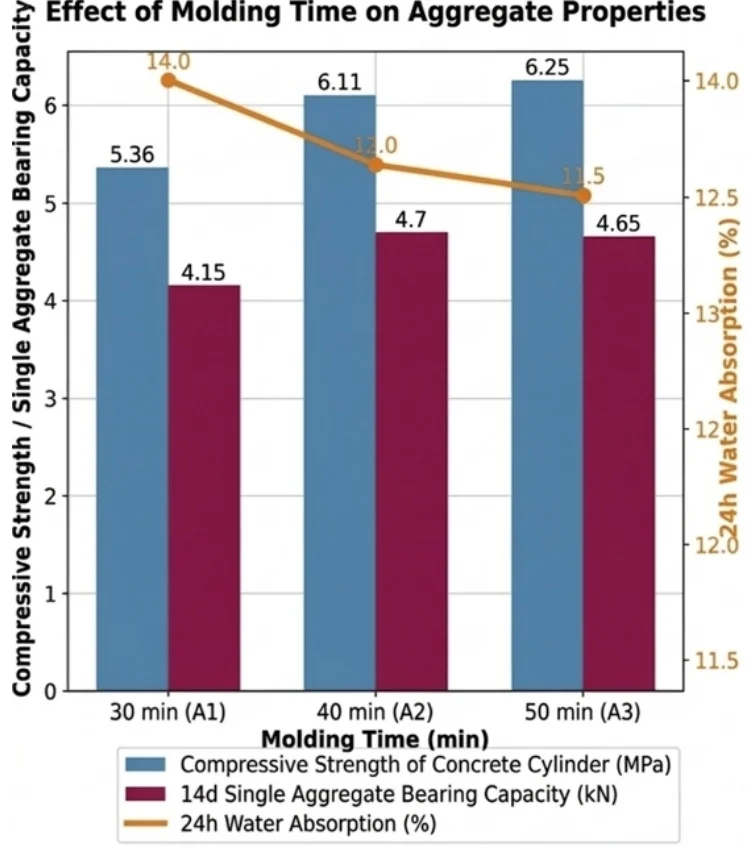
Fig. 1 Effect of Molding Time on Aggregate Properties
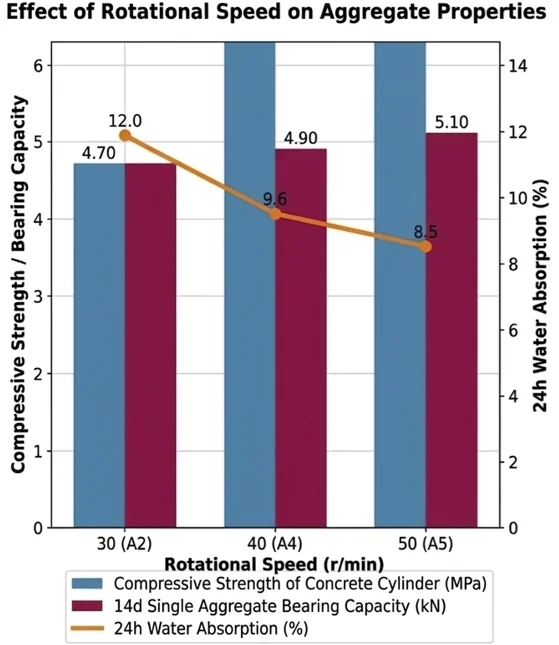
Fig. 2 Effect of Rotational Speed on Aggregate Properties
3.2. Evaluation method
The entropy weight method is a method to determine the objective weight of the index(Liu et al., 2011;Ozbakkaloglu et al., 2016). The specific algorithm is as follows :
( 1 ) Construct a judgment matrix and standardize the data with the range method.
( 2 ) Determine the ith index entropy
In the formula, represents the standardized result of the i -th indicator under the j -th experimental scheme;
(3) Determine the weight: Let be the entropy weight of the i -th evaluation indicator.
3.3. Evaluation results
In this evaluation, the single aggregate bearing capacity, 14 d cylinder compressive strength and 24 h water absorption of aggregate were taken as the evaluation objects, and the molding time, rotational speed and curing conditions were taken as the evaluation indexes. The final calculation results are shown in Table 5 :
Table 5 Calculation table of evaluation results
| evaluation object | evaluating indicator | Index entropy value | Index difference coefficient | Weight |
| Single aggregate bearing capacity | molding time | 0.540 | 0.460 | 46.71 |
| rotational speed | 0.703 | 0.297 | 30.14 | |
| curing condition | 0.772 | 0.228 | 23.14 | |
| compressive strength of concrete cylinder | molding time | 0.566 | 0.434 | 45.33 |
| rotational speed | 0.727 | 0.273 | 28.54 | |
| curing condition | 0.750 | 0.250 | 26.13 | |
| 24h water absorption | molding time | 0.659 | 0.341 | 36.91 |
| rotational speed | 0.734 | 0.266 | 28.80 | |
| curing condition | 0.684 | 0.316 | 34.29 |
It can be seen from Table 5 that through the analysis of difference coefficient, the influence of each process index on the bearing capacity of single aggregate at 14 d age is ranked as forming time > rotation speed > curing condition. The forming time of aggregate has a great influence on the single bearing capacity of aggregate, which is mainly due to the fact that the forming time is related to the compactness of aggregate. The longer the forming time is, the more compact the aggregate is and the better the quality of aggregate is without changing other conditions. The second is the rotational speed. The rotational speed plays an important role in the formation and particle size of the aggregate. The appropriate rotational speed is more conducive to the early formation of the aggregate and the acquisition of the target particle size. Finally, the effect of curing conditions on the bearing capacity of the single particle of the aggregate. Compared with the first two process indicators, the curing conditions have less influence on the bearing capacity of the single aggregate.
The influence of each process index on the compressive strength of the 14 d age is ranked as molding time > rotation speed > curing conditions. Because there is a certain positive correlation between the compressive strength and the bearing capacity of aggregate, the influence of the three process indexes on the compressive strength of aggregate is similar to that on the bearing capacity of single aggregate. However, the weight difference between the rotational speed and the curing condition is smaller, indicating that the influence of these two indicators on the compressive strength of the cylinder cannot be ignored.
The effect of each process index on the 24 hour water absorption at 14 days of age was ranked as molding time > curing condition > rotation speed. Therefore, it is very important to choose the appropriate molding time, rotational speed and curing conditions to ensure its strength and other physical properties.
4. Conclusion
Using titanium gypsum powder as the main material, adding a certain proportion of cement, silica fume, activator and binder, etc., the unburned ceramsite was prepared by optimizing the molding process parameters ( granulator speed, balling time and curing conditions ). Main conclusions :
( 1 ) Through the test of aggregate grain shape coefficient, bulk density, cylinder compressive strength and other indicators, it is known that the bulk density of the prepared titanium gypsum-coated ceramsite is in the range of >900 kg/m³ to ≤1000 kg/m³ (900 kg/m³ < bulk density ≤ 1000 kg/m³), and the apparent density ranges from 1700 kg/m³ to 2200 kg/m ³ , which belongs to 1000 artificial aggregate. In the test scheme, only A5, A7 and A8 meet the basic requirements of aggregate.
( 2 ) Based on the entropy weight method, the sensitivity analysis of cylinder compressive strength, water absorption and single aggregate bearing capacity of different test groups was carried out. The results showed that the order of influence on the bearing capacity of single aggregate at 14 d age was molding time > rotational speed > curing condition. The order of influence of cylinder compressive strength at 14 d age is molding time > rotational speed > curing condition ; the order of influence on the 24-hour water absorption at 14 days of age is molding time > curing condition > rotational speed.
Author Contribution
Chen W.J.: Conceptualization, Methodology, Software, Formal analysis, Investigation, Data curation, Writing – original draft, Visualization.
Hu Y.C.: Validation, Investigation, Resources, Writing – review & editing, Supervision, Project administration.
Shuai W.: Writing – review & editing, Validation, Formal analysis, Visualization.
Huang J.: Investigation, Data curation, Software.
Zhang C.J.: Writing – review & editing, Supervision, Project administration, Funding acquisition.
Acknowledgements
The authors express their sincere gratitude to the Zhejiang Provincial Water Science and Technology Program (Grant Nos. RB2513, RA2403, RB2415) for their invaluable financial support and assistance in this research.
Conflict of Interests
The authors declare no conflicts of interest.
Data Availability
The data supporting the findings of this study are available upon request from the corresponding author.
References
Alqahtani, F.K., Rashid, K., Zafar, I., et al., 2021, Assessment of morphological characteristics and physico‑mechanical properties of geopolymer green foam lightweight aggregate formulated by microwave irradiation: Journal of Building Engineering, v. 35, p. 102081, https://doi.org/10.1016/j.jobe.2020.102081. Back to citation
Chen, Y.H., Ye, Z., Chen, L., et al., 2025, Technological pathways and development trends of artificial aggregates I—Non-synthetic aggregates: Journal of Southeast University (Natural Science Edition), v. 55, no. 2, p. 1–11
Huang, J.L., Hou, J., Zheng, P.Q., et al., 2024, Preparation and properties of non‑sintered artificial lightweight aggregates based on fly ash and slag: Materials Reports, v. 38, no. 13, p. 150–158. Back to citation
Liu, W.B., 2021, Preparation of non‑sintered fly ash ceramsite and research on ceramsite lightweight aggregate concrete: Hefei, Hefei University of Technology, M.S. thesis, 78 p. Back to citation
Liu, Z., Chen, Q., Xie, X., et al., 2011, Utilization of the sludge derived from dyestuff‑making wastewater coagulation for unfired bricks: Construction and Building Materials, v. 25, no. 4, p. 1699–1706, https://doi.org/10.1016/j.conbuildmat.2010.11.084.
Ozbakkaloglu, T., Gu, L., and Pour, A.F., 2016, Normal‑ and high‑strength concretes incorporating air‑cooled blast furnace slag coarse aggregates: Effect of slag size and content on the behavior: Construction and Building Materials, v. 126, p. 138–146, https://doi.org/10.1016/j.conbuildmat.2016.09.015.
Shi, Y., Guo, W., Jia, Y., et al., 2022, Preparation of non‑sintered lightweight aggregate ceramsite based on red mud‑carbide slag‑fly ash: Strength and curing method optimization: Journal of Cleaner Production, v. 372, p. 133788, https://doi.org/10.1016/j.jclepro.2022.133788. Back to citation
Standardization Administration of China, 2010, Lightweight aggregates and test methods—Part 1: Lightweight aggregates (GB/T 17431.1‑2010): Beijing, Standards Press of China.
Standardization Administration of China, 2010, Lightweight aggregates and test methods—Part 2: Test methods for lightweight aggregates (GB/T 17431.2‑2010): Beijing, Standards Press of China.
Wang, W.K., 2023, Key technology and application of artificial aggregate preparation from industrial titanium gypsum: Zhengzhou, North China University of Water Resources and Electric Power, M.S. thesis, 69 p. Back to citation
Yu, Q., Li, C., Wang, Z., et al., 2019, Study on preparation and properties of unburned ceramsite with steel slag: IOP Conference Series: Materials Science and Engineering, v. 677, no. 2, p. 022067, https://doi.org/10.1088/1757-899X/677/2/022067. Back to citation