REVIEW ARTICLE · OPEN ACCESS
Sensitivity analysis of parameters of steam curing system for PCCP pipeline
- 1School of Water Conservancy, North China University of Water Resources and Electric Power, Zhengzhou 450046, China
- Received:
- Accepted:
- Published:
Abstract
Prestressed concrete cylinder pipes (PCCPs), composed of concrete, a steel cylinder, mortar, and prestressing steel wires, are widely used in water conveyance and diversion projects. In this study, a DN3200 buried PCCP (PCCP-E) is taken as the research object. Considering a summer construction environment, numerical simulations are conducted for the entire life cycle of the pipe—from fabrication and storage to buried operation—under different steam curing regimes, to investigate the evolution of the temperature field and stress field of the core concrete. The results indicate that: (1) when the curing duration and demolding time remain unchanged, curing temperature has a significant influence on the temperature peak, temperature difference, and stress peak of the core concrete; higher curing temperatures lead to higher temperature and stress peaks and earlier peak occurrence, and compressive stress during the heating stage is prone to exceeding concrete strength, suggesting that the steam curing temperature should be reduced as much as possible while satisfying the design strength; (2) the constant temperature curing duration has little effect on the temperature peak, and a longer duration reduces the maximum inner–outer temperature difference during the cooling stage but increases tensile stress; (3) extending the heating and cooling durations effectively reduces the temperature peak, temperature difference, and stress peaks; and (4) earlier demolding increases tensile stress in the core concrete, although its overall influence is relatively limited. The findings provide useful guidance for the design and construction of PCCP projects and contribute to improving product quality.
Keywords: Prestressed concrete cylinder pipe (PCCP);steam curing system;simulation analysis;sensitivity analysis
1. Introduction
With the increase of China 's population and the continuous advancement of urbanization construction, the problems caused by the uneven distribution of water resources have become increasingly prominent. Therefore, a number of major water resources allocation projects have been started, such as the South-to-North Water Diversion Project, the Hanjiang-to-Weihe River Water Diversion Project and the Yangtze-to-Huaihe River Water Diversion Project. Prestressed concrete cylinder pipe ( PCCP ) is a composite pipe composed of core concrete, prestressed steel wire and mortar protective layer. As the main pipe of medium and long distance pressure water conveyance in China, it has been widely used in various water transfer projects (Hu. 2017).
During long-term service, PCCPs are subjected to both internal water pressure and external loads, with the strength of the core concrete being a critical factor influencing structural safety and overall engineering quality. To improve construction and production efficiency, steam curing is commonly applied to the PCCP core concrete (SAC/TC 197. 2017). Steam curing significantly enhances early-age strength development and, to some extent, improves durability and crack control. However, existing studies have shown that intense hydration reactions and thermal stresses during steam curing can lead to the deterioration of the internal pore structure, adversely affecting both strength development and structural performance (Liu Wei. et al.2005; Liu B. et al. 2020; Peng Bo. et al. 2007). To address these issues, researchers have conducted systematic studies on optimizing steam curing regimes, indicating that proper control of pre-curing time, heating rate, and constant temperature conditions can effectively enhance early strength and reduce cracking risk in PCCP core concrete (Hua Lurong. et al.2025; Zhang Xiaochuang. et al. 2024; Dou. 2023).
Further research reveals that steam curing parameters significantly influence strength evaluation, temperature field distribution, and the performance of the protective layer in PCCP concrete (Zhou. 2022; Wang. 2021; Zhang. 2016). Additionally, studies focused on durability and microstructure show that the steam curing regime plays a crucial role in regulating chloride ion penetration, pore structure evolution, and crack self-healing capacity (Li C. et al.2024; Xu P. et al. 2025; Hu Y. et al. 2023). Based on these findings, pre-curing time, heating and cooling rates, constant temperature duration, and curing temperature are considered key process parameters affecting both the mechanical properties and long-term service behavior of concrete (Chen Lei. et al.2016; Zhang Yaohuang. et al. 2015). However, while increasing steam curing temperature or extending curing time can improve early demolding strength, these measures may negatively impact later strength development and long-term performance (Huang An. et al.2021; Shi J. et al. 2021). Furthermore, the impact of the curing regime on pore distribution and moisture absorption behavior should not be overlooked (Zhang Huimei. et al.2024; Yang Wenrui. et al. 2019).
The entire steam curing process involves five key factors that need to be controlled: constant temperature curing temperature, constant temperature curing time, heating curing time, cooling curing time, and demolding time. The values of each factor significantly influence the concrete's compressive strength. However, to date, no scholar has systematically studied the effects of these five factors on the compressive strength of concrete. Therefore, this study takes a summer construction environment as an example and performs a full lifecycle numerical simulation under different steam curing regimes. By analyzing the temperature field and stress field characteristics of the core concrete, the study aims to improve the quality of PCCP products.
2. Model and working condition design
2.1. Finite element model
This study analyzes a buried prestressed concrete cylinder pipe (PCCP-E) from a certain engineering project. The design strength grade of the core concrete is selected as C55 based on the working conditions. The design thickness of the protective mortar layer is 25 mm, with a design strength of 36 MPa. The high-strength cold-drawn steel wire used in the experiment has a minimum tensile strength of 1570 MPa and a wire wrapping stress of 1303 MPa. The inner steel cylinder of the PCCP is made of thin steel plates with a thickness of 1.5 mm.
The PCCP has an inner diameter of 3200 mm, a burial depth of 5 meters, and a working internal pressure of 0.4 MPa. The core concrete thickness is selected as 230 mm, with a steel wire diameter of 7 mm and a single layer of steel wire wrapping. According to the design standards, including ANSI/AWWA and ASTM standards, the core thickness is 230 mm, the outer diameter of the steel cylinder is 3372 mm, the steel cylinder thickness is 1.5 mm, the protective layer thickness is 25 mm, and the steel wire diameter is 7 mm. The pipe uses a single-layer steel wire wrapping with a wire pitch of 15.5 mm and an effective pipe length of 5000 mm. The design internal water pressure for the pipeline is determined to be 0.4 MPa.
The PCCP primarily consists of four materials: C55 concrete, M45 mortar, Q235B steel cylinder, and 1570- WCP-9 prestressed steel wire. The relevant mechanical parameters of the materials used in the PCCP model are shown in Table 1.
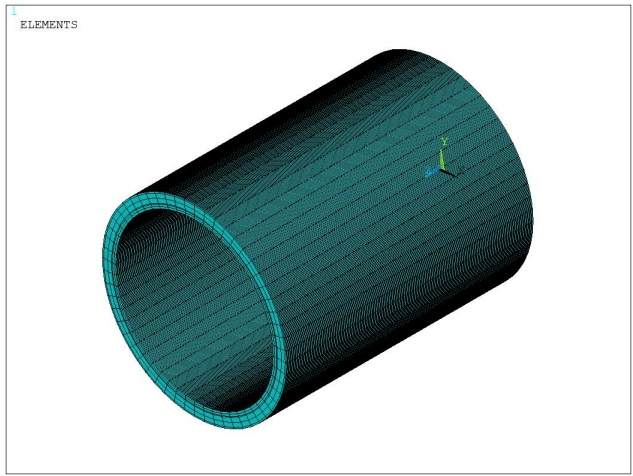
In this study, the finite element model of the PCCP is established using finite element software. The steel cylinder thickness is set at 1.5 mm. Considering the actual wire pitch, the steel cylinder is equivalently modeled as a 15 mm thick concrete model with the same elastic modulus.
Table 1 Material parameter table
| Material | Density(kg/m3) | ElasticModulus (MPa) | Poisson'sRatio | Compressive strengthdesign value(MPa) | Tensilestrength designvalue (MPa) | Yieldstrength (MPa) |
| Concrete | 2450 | 27860 | 0.2 | 44 | 3.86 | \ |
| Mortar | 2350 | 25254 | 0.2 | 36 | 3.49 | \ |
| Steelcylinder | 7850 | 206850 | 0.3 | \ | 470 | 310 |
| Steelwire | 7850 | 193060 | 0.3 | \ | 1570 | 1178 |
For modeling convenience and to better reflect the effect of the steel wires, the steel wires and concrete are treated as independent elements. The materials within the PCCP structure are assumed to have no slip behavior between them, and the elements are connected using a common node approach. The finite element model consists of 122,640 elements and 123,088 nodes. The finite element model of the PCCP is shown in Fig 1.
stage. In this study, the loads are calculated based on the AWWA C304 (ANSI/AWWA C304. 2011) standard. The values for loads such as the soil weight above the pipe, water weight, pipe weight, and working internal pressure are listed in Table 2:
2.2. Load combination
The stress state of the PCCP throughout its entire lifecycle is complex and varied. The loads acting on the pipeline during different stages, including preparation, storage, transportation, installation, and operation, include the pipe’s own weight, prestressing force from the steel wires, backfill pressure, water weight, internal water pressure, and thermal loads at each corresponding stage. In this study, the loads are calculated based on the AWWA C304 (ANSI/AWWA C304. 2011) standard. The values for loads such as the soil weight above the pipe, water weight, pipe weight, and working internal pressure are listed in Table 2:
Table 2 Design load value
| Name | Value |
| PipetopsoilweightWe | 374KN/m(Coveringsoil5m) |
| WaterbodyweightWf | 78.81KN/m |
| PipebodyweightWp | 69.92KN/m |
| WorkinginternalpressurePw | 0.4MPa |
In this study, a cooling method is used to simulate the prestressing of the steel wires. This method can accurately model the position of the steel wires and also simulate prestress loss. The stress in the steel wire is given by:
In the equation: Δt is the equivalent temperature drop used to simulate prestress; is the coefficient of linear thermal expansion of the prestressing wire, taken as 1 × is the prestress relaxation factor, not considered in this study; is the elastic modulus of the prestressing wire, taken as 205 GPa; is the prestress value, which is generally 70-75% of the ultimate tensile strength of the wire, in this study, the ultimate strength is 1570 MPa, so the applied prestress is taken as 1303 MPa.
2.3. Design of operating conditions
To reduce temperature induced cracks in the core concrete caused by large temperature differences, the curing regime specially includes controlled heating and cooling processes. In this project, the core concrete follows a 13-hour steam curing regime, consisting of 1 hour of static holding (after the core concrete is poured, a steam curing cover is placed, temperature sensors are connected, and the temperature control system is activated, which automatically enters the static holding phase). This is followed by 3 hours of heating, 8 hours of constant temperature curing (at , and 2 hours of cooling. After steam curing, the concrete enters the natural curing phase, with a curing time of 3 days.
For steam-cured concrete, the curing regime has a significant impact on the early-stage material properties and stress, particularly for PCCP, which is a composite pipe with unique shape and loading characteristics. The early stresses in the core concrete during steam curing are easily exceeded, leading to early cracking if the curing regime is not properly controlled. To minimize the possibility of cracking in the core concrete, this chapter takes a summer construction environment as an example, and analyzes the stress characteristics of the core concrete’s temperature field and stress field under different conditions by varying the curing temperature, curing time, heating rate, cooling rate, and demolding time during the steam curing phase.
3. Results analysis
3.1. Effect of curing temperature on temperature field and stress field
The model keeps the concrete material (C55), demolding time (10 hours), initial mold temperature , and curing time (heating for 2 hours, constant temperature curing for 8 hours, and cooling for 2 hours) unchanged. The constant temperature curing temperature is increased from to resulting in a greater temperature gradient during heating and cooling. The temperature field and stress field of the core concrete under different steam curing temperatures are analyzed.
As shown in Fig 2, the temperature variation trajectories at the center of the core concrete are similar under both curing temperatures. Higher curing temperatures result in higher core concrete temperatures. At , the peak temperature occurs at hours, with a maximum temperature of 66.42°C; at the peak occurs at t = 10 hours, with a maximum temperature of . This indicates that both the peak temperature and its occurrence time increase with the rise in curing temperature.
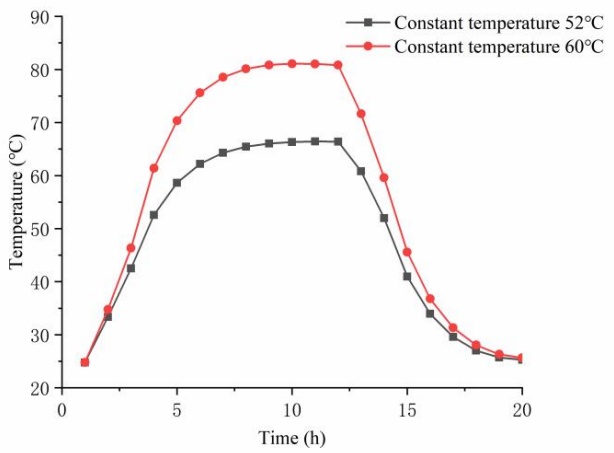
Fig.2 Temperature-time curves at the center of the core concrete for different curing temperatures
As shown in Fig 3, the variation trajectories of the temperature difference between the inner and outer surfaces of the core concrete are similar under both curing temperatures. Higher curing temperatures result in a larger temperature difference. At , the maximum temperature difference occurs at t = 14 hours, with a value of 19.61°C; at , the maximum temperature difference is 24.57°C also occurring at t = 14 hours. This indicates that although the time of the maximum temperature difference is not affected by the curing temperature, the temperature difference increases with the curing temperature, making it more likely to reach the most unfavorable temperature difference.
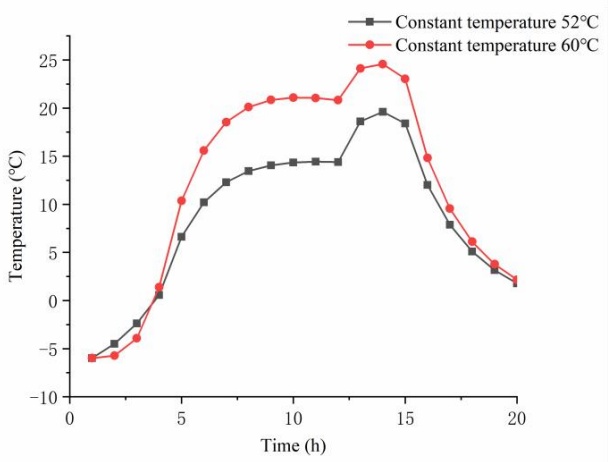
Fig.3 Temperature difference-time curves between the inner and outer surfaces of the core concrete for different curing temperatures
As shown in Fig 4, the stress variation trends at the characteristic points of the core concrete are similar under both curing temperatures. Higher curing temperatures result in higher core concrete stresses. The peak compressive stresses occur at t = 4 hours, and the peak tensile stresses occur at t = 13 hours and t = 16 hours, respectively. At curing, the maximum compressive stress at the core is 2.76 MPa, and the maximum tensile stress is 0.61 MPa; the maximum compressive stress at the surface is 2.17 MPa, and the maximum tensile stress is 0.66 MPa. At curing, the maximum compressive stress at the core is 4.16 MPa, and the maximum tensile stress is 0.66 MPa; the maximum compressive stress at the surface is 4.05 MPa, and the maximum tensile stress is 0.52 MPa. This indicates that the compressive stress of the core varies significantly with curing temperature, while the tensile stress changes less. Overall, higher curing temperatures lead to higher compressive and tensile stresses at the core, and higher surface compressive stress is associated with lower tensile stress. Although the time of peak stress does not change with curing temperature, as the temperature increases, the compressive stress peak is more likely to exceed the concrete strength, leading to the formation of early cracks.
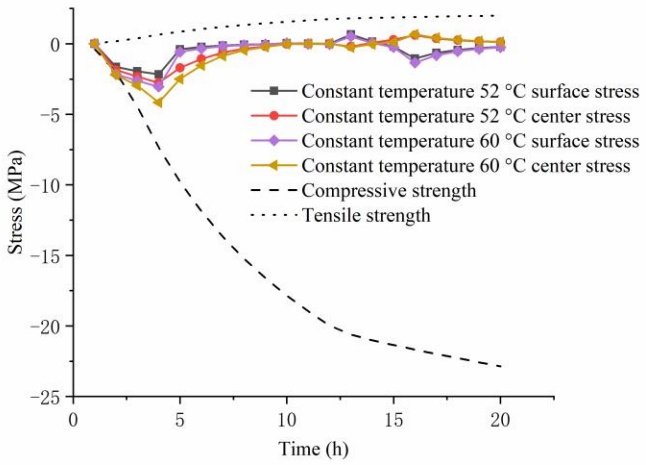
Fig.4 Time history curves of characteristic points of the core concrete under different curing temperatures.
3.2. Effect of curing time on temperature field and stress field
3.2.1 Constant temperature curing time
The model keeps the concrete material (C55), demolding time (10 hours), initial mold temperature , curing temperature (constant 52°C), heating time (2 hours), and cooling time (2 hours) unchanged. The constant curing time is reduced from 8 hours to 7 hours, while the heating and cooling gradients remain constant. The temperature field and stress field of the core concrete under different constant steam curing times are analyzed.
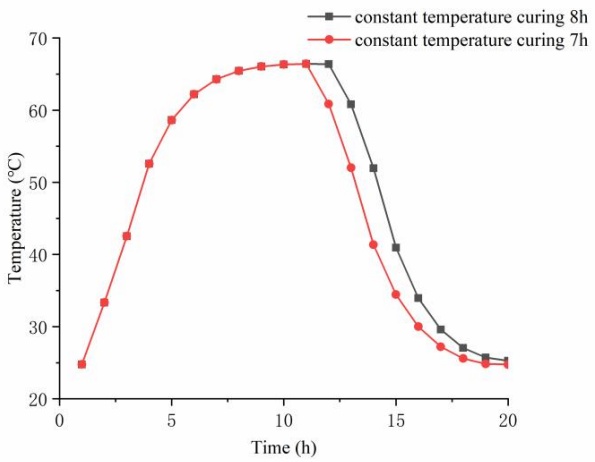
As shown in Fig 5, the temperature variation trajectories at the center of the core concrete are similar for the two constant curing times, while the temperature–time curves during the cooling stage shift with changes in the constant curing duration. When the constant curing time is 7 h, the peak temperature occurs at t = 11 h, with a maximum value of when the constant curing time is 8 h, the peak temperature still occurs at h with the same maximum value of . Therefore, under a constant curing temperature, extending the constant curing time does not affect either the peak temperature or its occurrence time.
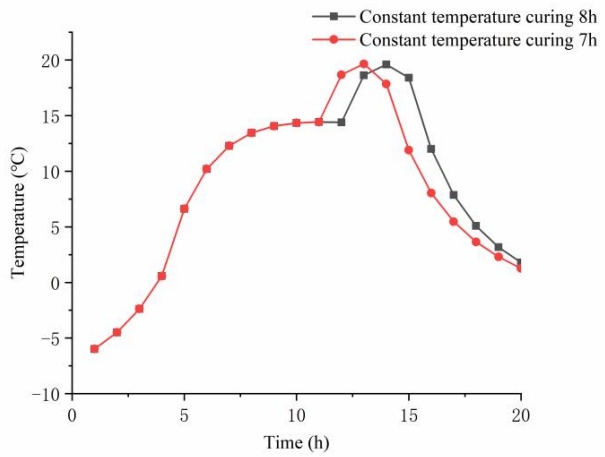
As shown in Fig 6, the variation trends of the temperature difference between the inner and outer surfaces of the core concrete are also similar for the two constant curing times, and the temperature-difference curves during the cooling stage shift with the constant curing duration. When the constant curing time is 7 h, the maximum temperature difference occurs at h with a value of 19.65°C; when the constant curing time is 8 h, the maximum temperature difference occurs at t = 14 h with a value of 19.61°C Thus, a longer constant curing time slightly reduces the maximum inner–outer temperature difference of the core concrete, although the overall variation remains small.
As shown in Fig 7, the stress variation trends at the characteristic points of the core concrete are similar under the two constant curing times, while the stress– time curves during the cooling stage shift with changes in the constant curing duration. When the constant curing time is 7 h, the maximum tensile stress at the core center occurs at t = 15 h with a value of 0.47 MPa, and the maximum tensile stress at the surface occurs at t = 12 h with a value of 0.65 MPa. When the constant curing time is 8 h, the maximum tensile stress at the core center occurs at h with a value of 0.61 MPa, and the maximum tensile stress at the surface occurs at t = 13 h with a value of 0.66 MPa. Overall, under a constant curing temperature, a longer constant curing time leads to higher tensile stresses in the core concrete during the cooling stage, making the tensile stress peak more likely to exceed the concrete strength at the corresponding time.
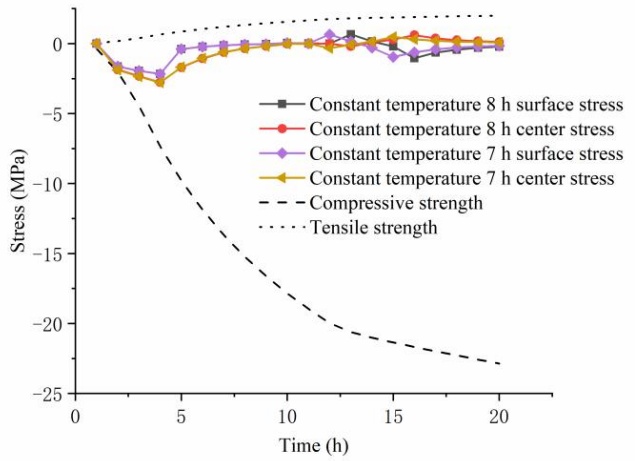
Fig.7 Time history curves at the characteristic points of the core concrete under different constant curing times
3.2.2 heating and cooling durations
The model keeps the concrete material (C55), demolding time (10 h), initial mold temperature curing temperature (constant 52°C), and constant temperature curing duration (8 h) unchanged. The heating and cooling durations are increased from 2 h to 3 h, that is, the heating and cooling gradients are reduced. The temperature field and stress field of the core concrete under different heating and cooling durations during steam curing are then analyzed.
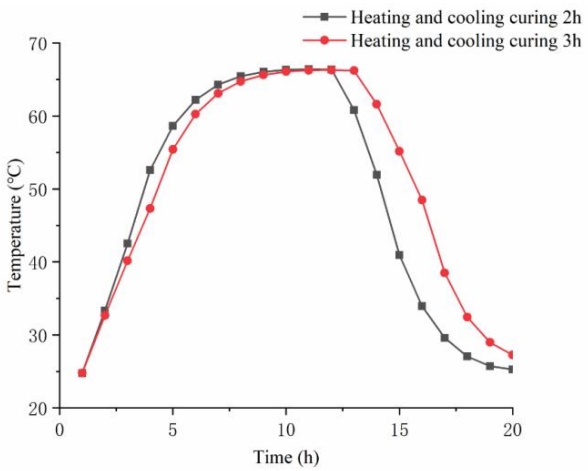
As shown in Fig 8, the temperature variation trajectories at the center of the core concrete are similar under the two heating and cooling durations. A smaller temperature gradient results in a more gradual temperature evolution in the core concrete. When the heating and cooling duration is 2 h, the peak temperature occurs at t = 11 h with a maximum value of when the duration is increased to 3 h, the peak temperature occurs at t = 12 h with a slightly lower maximum value of . This indicates that a smaller temperature gradient leads to a lower peak temperature in the core concrete.
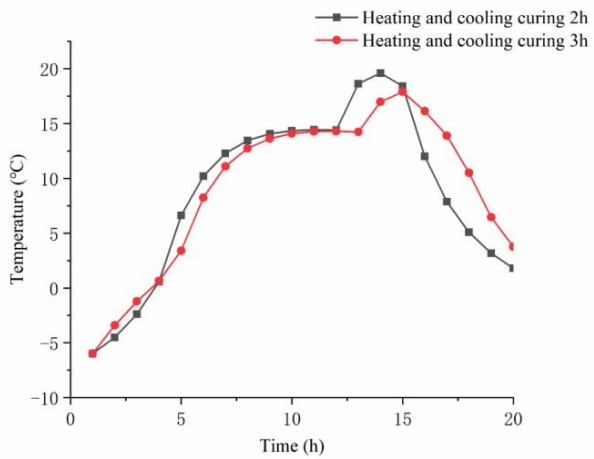
As shown in Fig 9, the variation trends of the temperature difference between the inner and outer surfaces of the core concrete are also similar under the two heating and cooling durations. A smaller temperature gradient results in a smaller inner–outer temperature difference during the heating stage, while a larger difference is observed during the cooling stage. When the heating and cooling duration is 2 h, the maximum temperature difference occurs at t = 14 h with a value of 19.61°C; when the duration is extended to 4 h, the maximum temperature difference occurs at t = 15 h with a value of 17.89°C Therefore, a longer heating and cooling duration reduces the maximum inner–outer temperature difference of the core concrete, although the variation in temperature difference is relatively pronounced.
As shown in Fig 10, the stress variation trends at the characteristic points of the core concrete are similar under the two heating and cooling durations. When the heating and cooling duration is 2 h, the maximum compressive stress at the core center is 2.76 MPa and the maximum tensile stress is 0.61 MPa; the maximum compressive stress at the surface is 2.17 MPa and the maximum tensile stress is 0.66 MPa. When the heating and cooling duration is increased to 3 h, the maximum compressive stress at the core center is 2.78 MPa and the maximum tensile stress is 0.51 MPa; the maximum compressive stress at the surface remains 2.17 MPa and the maximum tensile stress remains 0.66 MPa. These results indicate that the heating and cooling duration has a limited effect on surface stresses but a more pronounced influence on stresses at the core center. A longer heating and cooling duration leads to lower stress levels in the core concrete, thereby reducing the risk of early-age cracking.
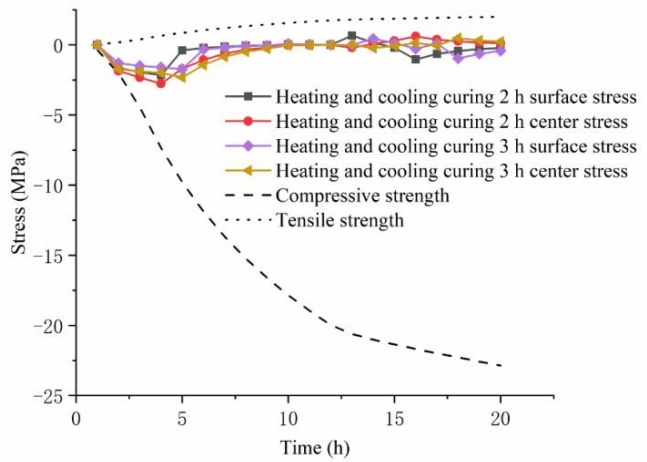
Fig.10 Temperature difference–time history curves between the inner and outer surfaces of the core concrete under different heating and cooling durations
3.3. Effect of demoulding time on temperature field and stress field
The model keeps the concrete material (C55), initial mold temperature , curing regime (heating for 2 h, constant temperature curing for 8 h, and cooling for 2 h), and curing temperature (constant unchanged. The demolding time is increased from 10 h to 11 h, and the temperature field and stress field of the core concrete under different demolding times are analyzed.
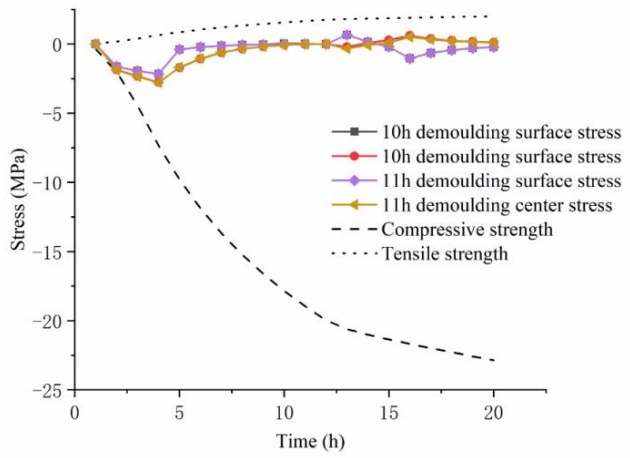
Fig.11 Time history curves of core feature points with different demoulding time
As shown in Fig 11, the stress variation trends at the characteristic points of the core concrete are similar for the two demolding times, and the occurrence times of the stress peaks remain the same. When the demolding time is 10 h, the maximum compressive stress at the core center is 2.76 MPa and the maximum tensile stress is 0.61 MPa; the maximum compressive stress at the surface is 2.17 MPa and the maximum tensile stress is 0.66 MPa. When the demolding time is extended to 11 h, the maximum compressive stress at the core center remains 2.76 MPa, while the maximum tensile stress decreases to 0.52 MPa; the surface compressive and tensile stress maxima remain unchanged at 2.17 MPa and 0.66 MPa, respectively. These results indicate that the demolding time has a limited effect on surface stresses but a more pronounced influence on stresses at the core center. Earlier demolding leads to higher tensile stresses in the core concrete during the cooling stage, making the tensile stress peak more likely to exceed the tensile strength of concrete and thus increasing the risk of cracking.
4. Conclusion
Through the parametric analysis, this study investigates the effects of five factors—including steam curing temperature, constant temperature curing duration, heating and cooling durations, and demolding time on the temperature field and stress field of PCCP core concrete under summer construction conditions. The following conclusions are drawn:
(1) When the curing duration and demolding time remain unchanged, the curing temperature has a significant influence on the peak temperature, the occurrence time of the peak temperature, the maximum inner–outer temperature difference, and the peak stress of the core concrete, while it does not affect the occurrence times of the peak stress and the maximum temperature difference. Higher curing temperatures result in higher peak temperatures, peak stresses, and inner–outer temperature differences, and lead to an earlier occurrence of the temperature peak. In particular, the compressive stress during the heating stage is more likely to exceed the concrete strength. Therefore, the steam curing temperature should be reduced as much as possible while ensuring that the design strength of the concrete is satisfied.
(2) When the curing temperature and demolding time are kept constant, the constant temperature curing duration has little effect on the peak temperature and its occurrence time, and only a minor influence on the maximum inner–outer temperature difference and peak stress. A longer constant temperature curing duration slightly reduces the maximum inner–outer temperature difference during the cooling stage but increases the tensile stress. Thus, the constant temperature curing duration should be shortened as much as possible while ensuring sufficient demolding strength.
(3) When the curing temperature and demolding time remain unchanged, the heating and cooling durations have little effect on the peak temperature but exert a significant influence on the peak stress and the maximum inner–outer temperature difference. Longer heating and cooling durations reduce the peak temperature, the maximum temperature difference, and the peak tensile and compressive stresses. Therefore, the heating and cooling durations should be extended as much as possible without compromising construction efficiency.
(4) When the curing temperature and curing duration remain unchanged, earlier demolding leads to higher tensile stresses in the core concrete, although the overall effect of demolding time on core stress is relatively small.
Conflict of Interest: The author confirm that there is no conflict of interest related to the manuscript.
References
Shaowei Hu. Theory and Practice of Bearing Safety Assessment of Prestressed Concrete Cylinder Pipe ( PCCP ) Structure [ M ]. Beijing : China Water Conservancy and Hydropower Press, 2011.
National Technical Committee for Standardization of Cement Products (SAC/TC 197). Prestressed concrete cylinder pipe:GB/T 19685-2017[S].Standards Press of China,2017. Back to citation
Liu Wei, He Zhimin, Xie Youjun, et al. Chloride ions penetration resistance of steam curing concrete[J]. Concrete, 2005, (06): 56-60. Back to citation
Liu B, Jiang J, Shen S, et al. Effects of curing methods of concrete after steam curing on mechanical strength and permeability[J]. Construction and Building Materials, 2020, 256: 119441. Back to citation
Peng Bo. Influence of Steam-Curing System on Performance of High Strength Concrete[D]. Wuhan University of Technology, 2007. Back to citation
HUA Lurong, HU Yuquan. Effect of steam curing system on strength of PCCP core concrete[J]. Building structure, 2025, 55(06): 69-73+88. Back to citation
ZHANG Xiao-chuang, LlU Peng-cheng, ZHANG Ci-gin, et al. Research Progress on Crack Prevention and Control Technology of PCCP Core Concrete[J]. China Rural Water Conservancy and Hydropower,2024, (07): 142-149. Back to citation
Dou Xiaoxue. Analysis of Temperature, Humidity and Coupled Stress Field of Prestressed Concrete Cylinder Pipe at Early Age[D]. North China University of Water Resources and Electric Power, 2023. Back to citation
Zhou Zhentong. Study on Strength Inspection and Evaluation Method of PCCP Concrete[D]. North China University of Water Resources and Electric Power, 2022. Back to citation
Wang Kun. MIX PROPORTION DESIGN AND PERFORMANCE TEST OF PCCP COVER MORTAR[D]. North China University of Water Resources and Electric Power, 2021. Back to citation
ZHANG Leishun,ZHANG Min, GE Wei, et al. PCCP Temperature Field Analysis at Steam Curing Stage Considering Temperature Effect[J]. Journal of Building Materials, 2016, 19(05): 855-859. Back to citation
Li C, Hu S, Hu Y, et al. Investigating the impact of steam curing parameters on the chloride ion penetration resistance of the prestressed concrete cylinder pipe (PCCP) protective layer[J]. Journal of Building Engineering, 2024, 92: 109777. Back to citation
Xu P, Ge J, Mao J, et al. Polycarbonate resin powder production via steam precipitation process: Experiment and CFD simulation[J]. Powder Technology, 2025, 449: 120373. Back to citation
Hu Y, Hu S, Li W, et al. A time-variant model of chloride diffusion in prestressed concrete cylinder pipe (PCCP) considering the effects of curing age[J]. Construction and Building Materials, 2023, 368: 130411. Back to citation
Chen Lei, Chen Guoxin, Su Fang. Study on the Mechanical Properties of Steam Cured Concrete at Home and Abroad[J]. Comprehensive utilization of fly ash, 2016, (05): 61-64. Back to citation
ZHANG Yaohuang, SUN Hong, LI Xiao, et al. Study of Steam-cured System lmpacton Concrete Compressive Strength and Prediction of Strength Model[J]. Material introduction,2015, 29(S2): 554-558+564. Back to citation
HUANG An, LI Beixing, YANG Jianbo, et al. Effect of Steam Curing System on Strength and lmpermeability of Precast Bridge Deck Concrete[J]. Silicate Bulletin, 2021, 40(04): 1170-1177. Back to citation
Shi J, Liu B, Zhou F, et al. Effect of steam curing regimes on temperature and humidity gradient, permeability and microstructure of concrete[J]. Construction and Building Materials, 2021, 281: 122562. Back to citation
ZHANG Huimei, JiNG Panyuan, LI Yugen. Effect of curing conditions on strength and pore development of aeolian sand concrete[J]. Building structure, 2024, 54(06): 99-105. Back to citation
Yang Wenrui, Yuan Jiao, Feng Zhongmin, et al. Effect of high temperature curing on moisture absorption performance of GFRP bars embedded in concrete[J]. Building structure,2019, 49(22): 97-100+96. Back to citation
American National Standards Institute ANSI/AWWA C304.Design of Prestressed Concrete Cylinder Pipe[S]. Denver, Colorado: American Water Works. Association, 2011. 1 2